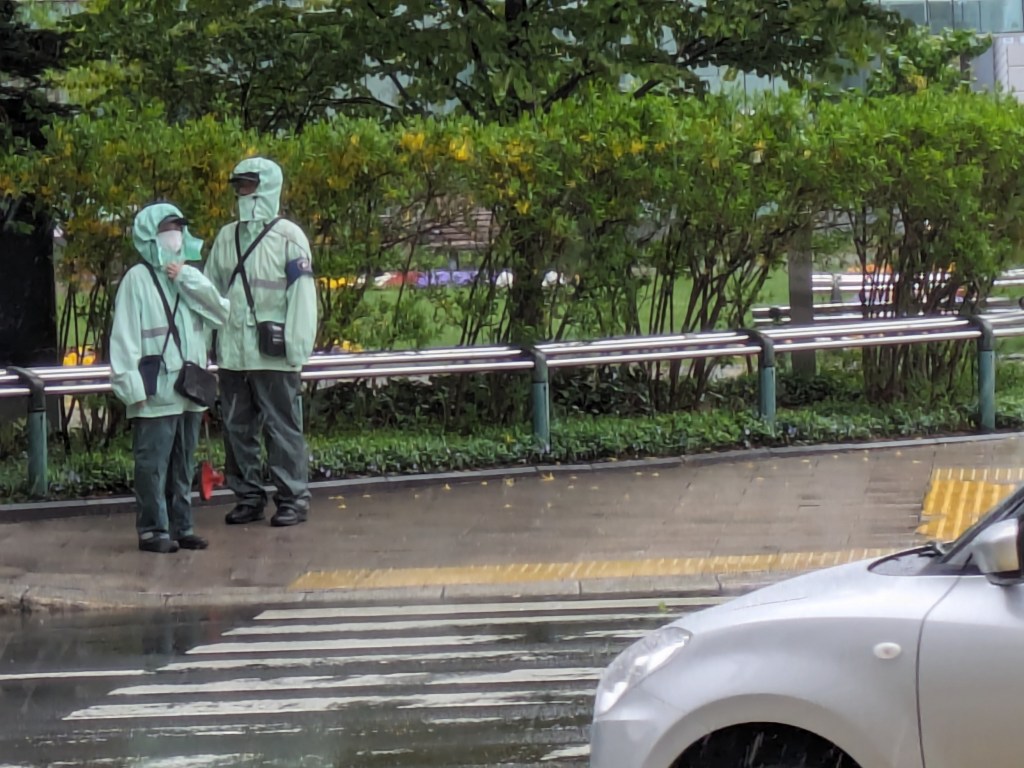
Sapporo is laid out in a grid. A pedestrian has to stop and wait every 100 metres to cross a road, giving you a good minute to appreciate the icy rain that the wind pushes into your face. At one intersection an ambulance with lights and sirens stopped and politely ushered me across before taking off again.
The Sapporo Tower was wreathed in clouds and the umbrellas in the beer garden Alan Booth visited were lashed down and wet through.
Outside the Hokkaido Newspaper offices today’s newspaper was pinned up behind a glass display case and an elderly man stood reading it under a dark blue umbrella.
I looked inside a soba restaurant. It was 12.05 and there were free tables. I went in. Five minutes later the restaurant was full and the proprietress was telling customers to wait under the roof of the neighbouring building. I don’t think even one person took her advice. When I paid for my vegetable tempura and noodles we exchanged conspiratorial smiles. I had admired the way she handled her restaurant with an unfussy directness.
I did the various chores I had listed for myself – put my bike back together, sent its bag southwards, bought bear spray and other sundries.
I walked down Badger Alley, the former red light district and now a jumble of shops , to Ramen Alley, where a hole-in-the wall ramen shops face each other across a lane two metres wide and 30 metres long. Tourists walked in and out of the restaurants and I waited in vain to take a decent photograph.
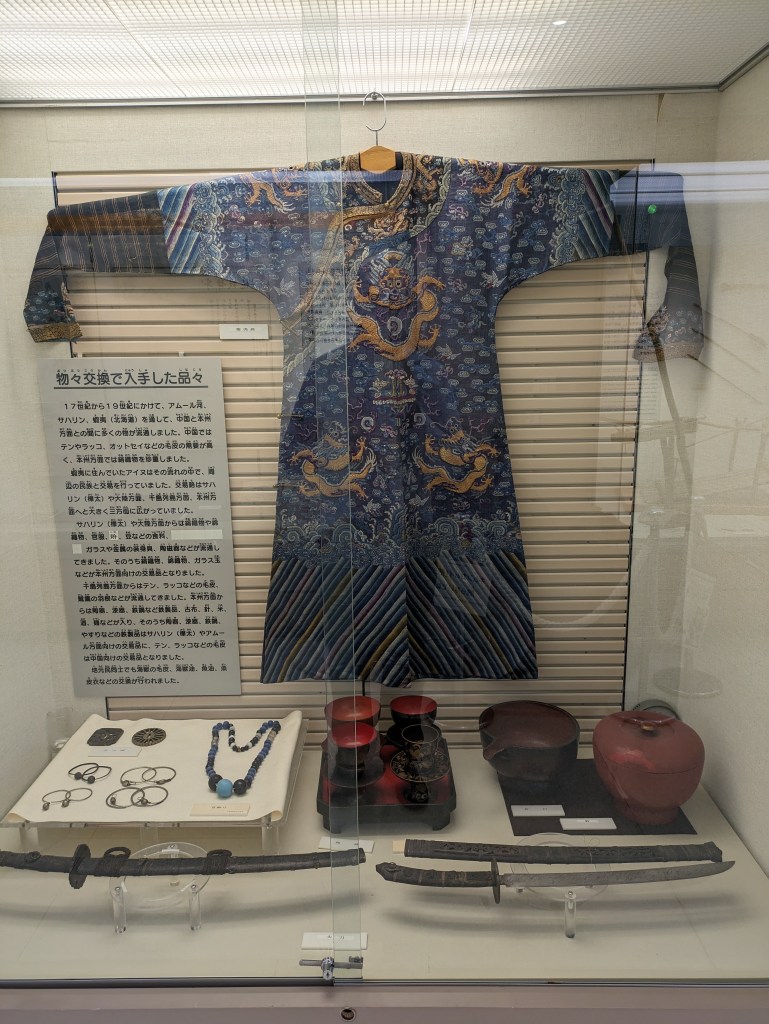
I braved the weather later in the day to visit the Hokkaido Ainu Centre. I walked around the building twice before realising it was on the 7th floor. I had the place to myself. There wasn’t even someone behind the front desk.
The Ainu are Japan’s indigenous people and they used to populate northern Honshu and Hokkaido. I don’t know enough about Ainu history to do it any justice, enough to say that the ‘Wajin’ or ethnic Japanese traded with them from the 15th century. As the Ainu were rich in natural resources trading descended into, as Booth puts it, genocidal warfare. The Meiji government of the 1800s passed the Hokkaido Colonization Act and other measures to assimilate the Ainu into Japanese culture in a manner native Americans and Australian aborigines would recognise. Their handicrafts reminded me of similar things I’ve seen in native American museums, albeit the Ainu also traded with the Chinese and their clothing and laquerware reflects this.
This evening I walked to a yakisoba restaurant. Outside the shop you choose the amount of noodles you wanted. Servings varied in size from the small to what looked like an bucket of noodles upturned into a plate. I took the ‘Miracle’ serving, 2.5 eggs with of noodles cooked and weighed on a set of scales, with a side of yakiniku. The lady watched me take a mouthful.
“How is it?” she asked. I wanted to tell her delicious, but I was choking on a noodle and gave her a weak thumbs up instead. There were six different sauces to try. I asked her what was in the special sauce, thinking she must have made it herself. She frowned and picked up the bottle she had poured it from and read the list of ingredients.
“Spring onions, vinegar. You know, lots of things.”
I understood why she had given me a two litre pitcher of water when I tried the ramen sauce.
I had graduated to waterproof cycling trousers over my normal trousers to protect myself from the weather. This meant I had to grope around in my trousers if I wanted to get something from the pocket. I caused a brief flurry of excitement when I stopped on the way home and, as I pulled my phone out, a 1,000 yen note came with it and was snatched away by the hurricane.
One woman tried to stamp on it but it eluded her and she and her friends chased it across the pavement. They couldn’t quite catch it, but a man emerging from the underground managed to trap it on his second attempt, much to everyone’s delight.
There are so many things I’d like to talk about – the underground walkways I discovered too late, the smoking ‘rooms’ the size of a walk in wardrobe where public smokers huddle miserably, the gleaming slip-on shoes of Japanese businessmen – but my train leaves tomorrow at 7.30 and I have promised myself an early night.
Pray for no snow, light winds and a good night’s sleep!



 The Himedomachi Cycling Club
Leave a comment