
We ate spinach grown in the greenhouses outside the window and chatted to the owner. Behind her thin glasses she had an incredibly expressive face, unmarked for someone approaching fifty, radiant and quick to laugh. I asked her if she had children – family photos lined the stairs – and she said she didn’t and that her parents were worried. I wondered how happy she really was stuck on this farm in a town that the people in Jumonji, just 75 kilometres down the road, had never heard of.
She liked the tourists that came in ones and twos. Not the bus tourists. The ones that were interested in Aomori. She had been in the hosting business for almost a decade and my impression was that the house was always full and yet she spoke to us with genuine interest and took the time to explain the things we didn’t understand.
We liked her and invited her to come to see the samurai houses with us, an invitation she refused as the next guests were arriving just after lunch.
Many years ago some kendo friends and I ate at the house of the local kendo master, a fencer so good that he was still representing the prefecture in his fifties. It was pouring rain when we left and yet he stood in the driveway until we had driven out of sight. Mrs Fujita did the same, walking me to the edge of her property to see me off, telling me that the bears would be in the mountain passes, not the plains and to take care on the descent….
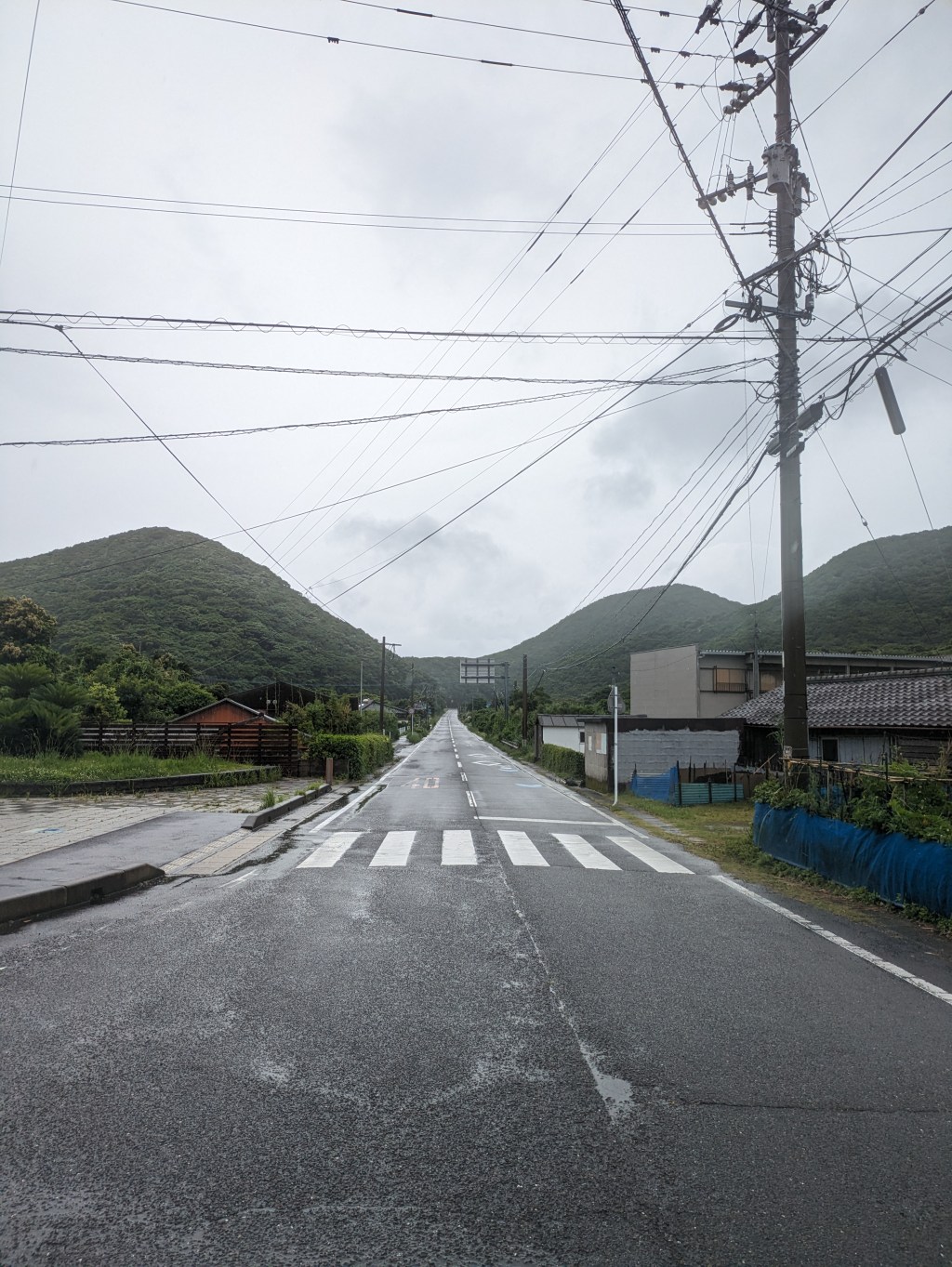
The sky was a weird colour, blue I think they call it and, after going over the pass, skimmed down the hill that seemed to last forever.
I met Jared at Kakunodate, a magnet for tourists for its old samurai houses. Rickshaw drivers in conical hats, jackets and black tights waited for customers, fiddling with their phones. A woman stopped us offering ice cream. Two steps further another offered us sesame biscuits.
The houses stand behind black wooden fences, along a tree lined road. Asian tourists fresh off the tour buses dipped in and out of the souvenir shops eating ice-cream. We ducked into a house-cum-museum as there was no one outside. The woman behind the counter gave us the price in English.
The house was really a collection of buildings, a communal living area, an armoury, a museum dedicated to Odano Naotake, a relative of the Aoyogi clan, who was the first Japanese person to translate a Dutch medical textbook in 1774, a first edition of which was on display. There were photos from the end of the Tokugawa and beginning of the Meiji period, when the samurai handed over power to a newly formed constitutional democracy and started to be ridiculed for their antiquated topknots. The gardens featured koi and a samurai-themed tea house, which we eschewed.
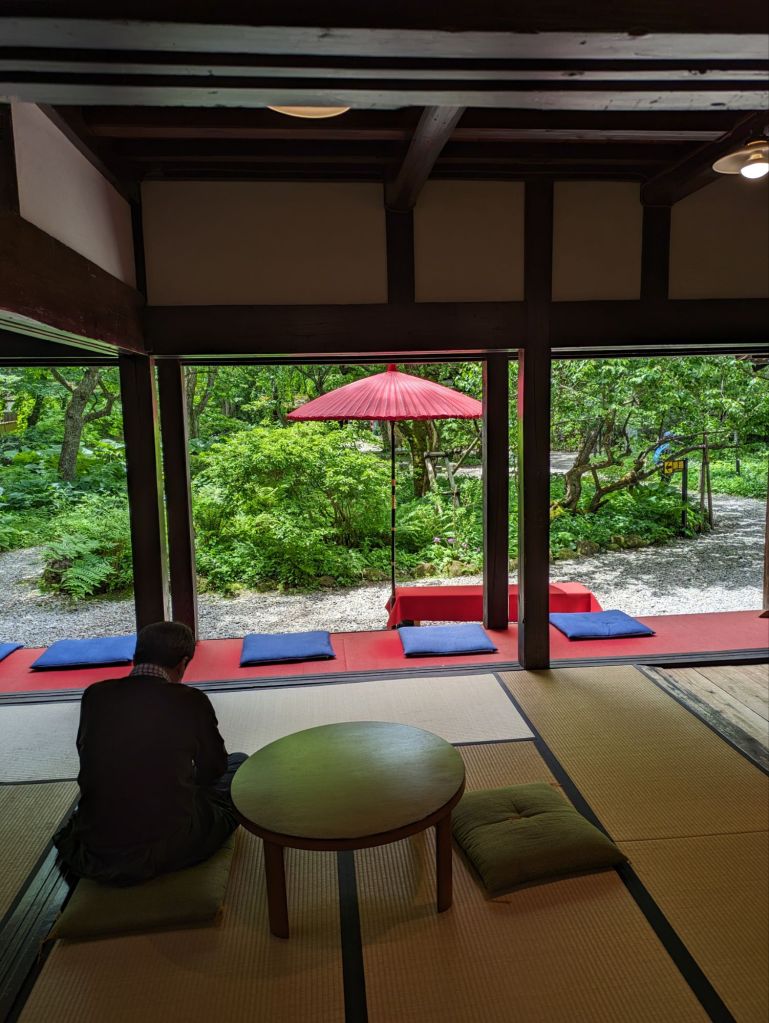
We took summer sandwiches to the park and watched a boy the size of a fire hydrant with shorts and a bowl cut run towards his grandmother holding something in each hand.
“Look! Poo!”
Jared and I laughed aloud.
The grandmother showed us what the boy hand brought.
“Pinecones,” she said, smiling.
The cycling was easy after lunch and Jared drove ahead to check in. I noticed my cycling style had changed. I’ve trained to be a ‘spinner’, someone who turns the pedals quickly using minimum force as this is the most efficient way to cycle. But somewhere in the north I had become a ‘masher’ someone who mashes down hard on the pedals at a lower cadence.
In Hakodate I had so much trouble letting myself back into my BnB that the owner had to help me. I had followed his instructions – turn the dial one way, punch in the code, turn it the other – but the door didn’t unlock. I demonstrated to him.
“Ah, but you have to let go of the dial, then it will open.”
That’s what I have to do. I have to let go of the dial and then it unlocks.
I became a spinner again, cycling through the fields southeast of Kakunodate, getting lost just as Booth did. I was hoping that my Garmin would start navigating again as I moved south. Instead I was listening to Google Maps. I can only assume she had taken on the spirit of Booth because just as I thought I had got completely lost, I found Booth’s left turn at Hiraka, although now it’s signposted.

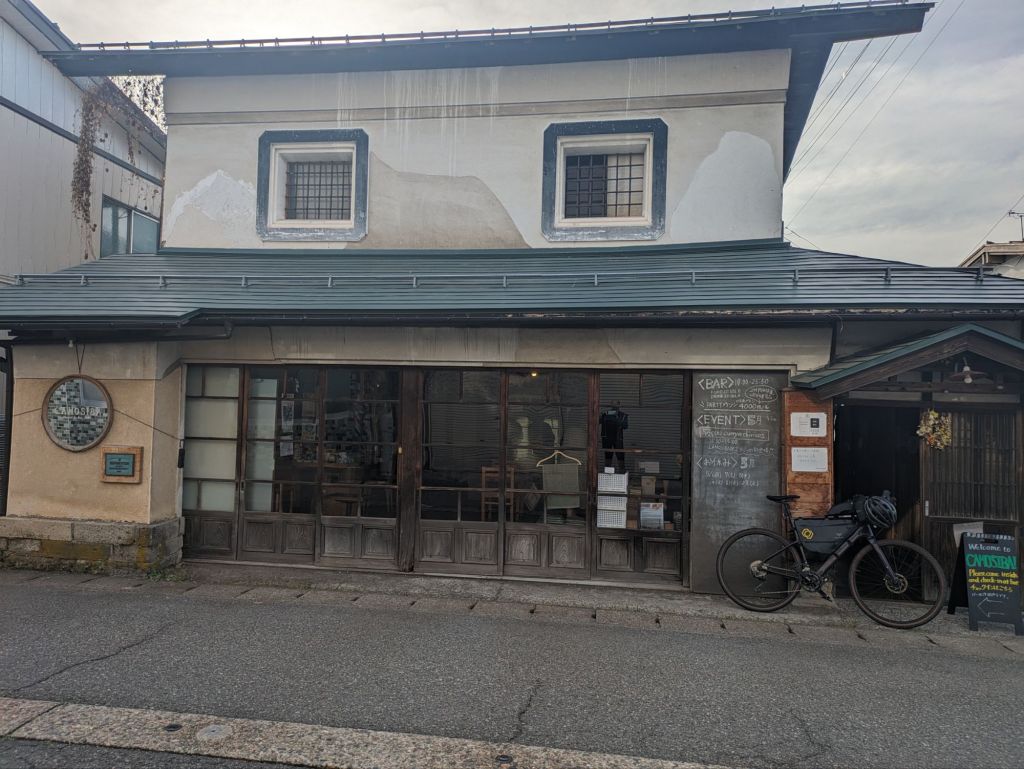
Jared had drunk an artisanal cider and a draft beer by the time I arrived at Camoshiba in Jumonji. The owner, a 35-year old called Madoka, had visited backpacking destinations all over the world and brought that atmosphere back to Japan. Guitar on the wall, plywood bar, low slung tables and comfy cushions. She had two other businesses, a sauna and a cider press and had sent her employees on a fact finding trip to Portland.
Madoka was easy to admire and Jared and her drank beer then sake together. A local character came in wearing dark glasses and a flamboyant shirt and said he was from the CIA. Madoka’s phone rang and she walked around the bar introducing everyone to her friend in the US, her husband and their daughter.
We asked about the Akita bijin, the beautiful women Akita is famous for.
“Madoka has snow white skin,” one of her bar staff offered. All the other patrons were men.
I went to bed early my belly full of pizza and curry. I’d cycled 75 kilometres and had many more to do in the morning. Alan Booth sang enka and drank beer.



 The Himedomachi Cycling Club
Leave a comment