I had an Alan Booth moment today in Niimi. The first person I spoke to said, “Why did you come to Niimi?”
I’d started riding at 7.00, stopping for a quick breakfast and visiting Musashi’s home (rebuilt after a fire and not open to the curious) and the Musashi Budokan, a modern building shaped like a white elephant, sorry, samurai helmet and deserted at 8.00.
I climbed out of Ohara and a group of junior high school students wished me a good morning in an unironic way, so I greeted them back and we waved to each other until I rounded a bend and they slipped out of sight.
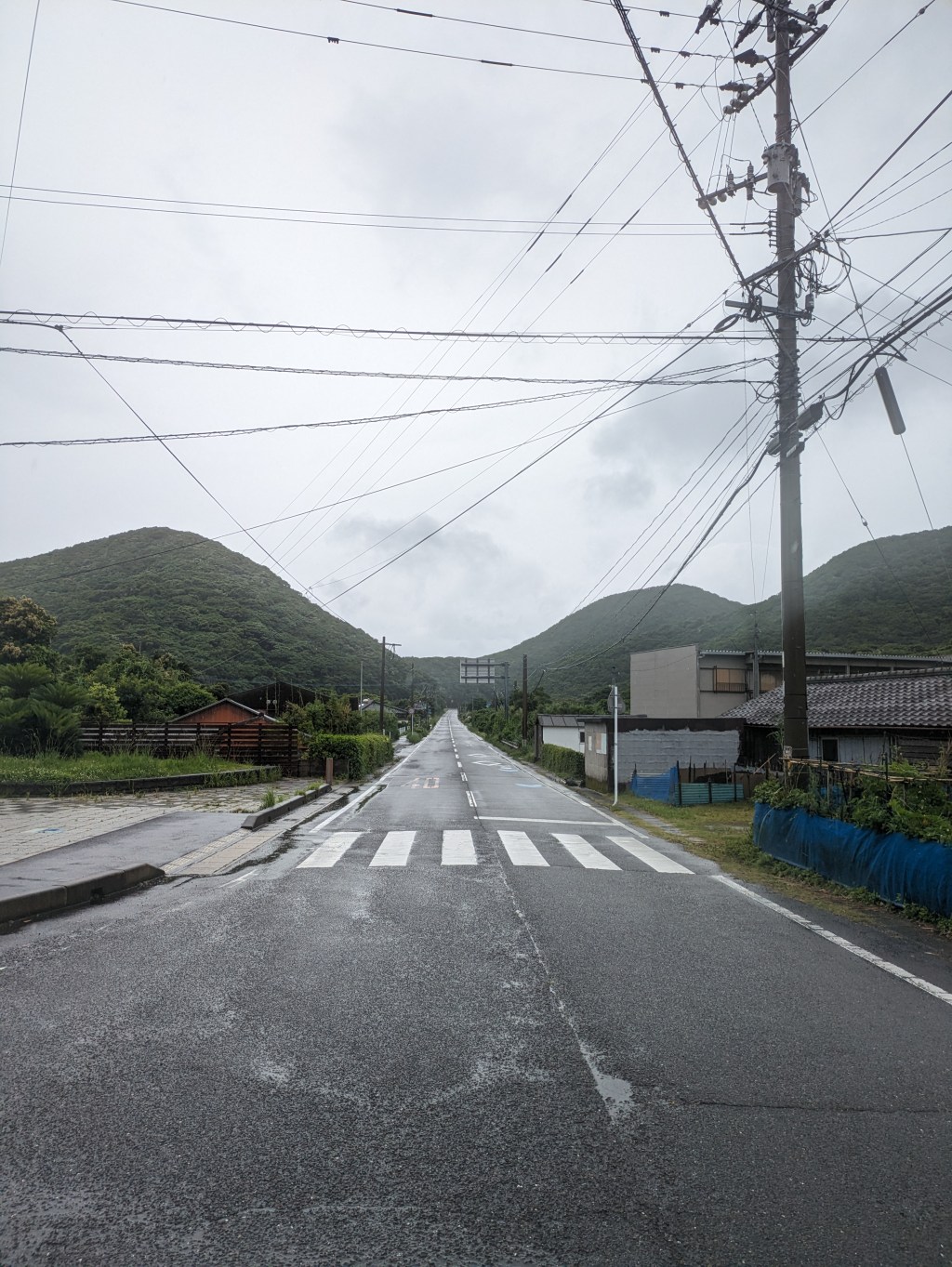
I passed the sign for Okayama Prefecture – stencilled into the side of a red, plastic barrel – and spent the day going up short climbs and rolling down endless inclines. Traffic was light, the rice fields endless and the temperature in the low 20s. Perfect riding weather.
I stopped at a convenience store where I puzzled over how to open the automatic doors. An elderly woman had left her shopping chariot outside, kind of like a baby’s pram but with a shelf instead of a seat. You see hunched women in sun bonnets pushing these in the middle of the streets as they go to fetch their shopping. Women who come up to my sternum and who often wish me good morning, all wearing face masks with only their eyes showing under the brims of their hats.

I cycled lazily through Tsuyama, a castle town with rows of old, wood fronted shops selling tofu and coffee, the low buildings I couldn’t find in Niigata but thriving here in Okayama. A group of Western tourists, heavy-set retirees in sunglasses and unfortunate footwear, almost stepped out under my wheel to cross to the castle.
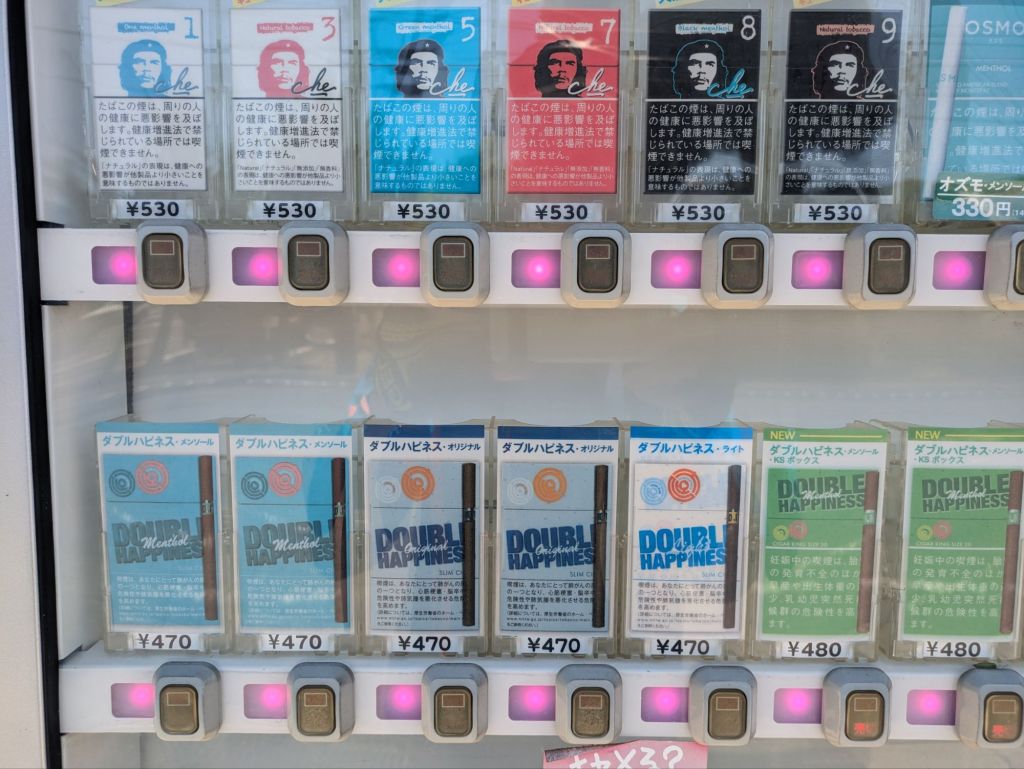
I cycled through a shopping arcade, deserted at 10am and past a row of four or five vending machines selling cigarettes. I stopped for a drink. They sold every kind of cigarette and cheroot available. I was tempted to buy a packet of Double Happiness just for the kick, but now you have to insert a card to prove you are twenty. I don’t know how many times I caught my junior high students buying cigarettes from the machine at the shop across from my house, always for their mothers mind you. They must have smoked sixty a day.
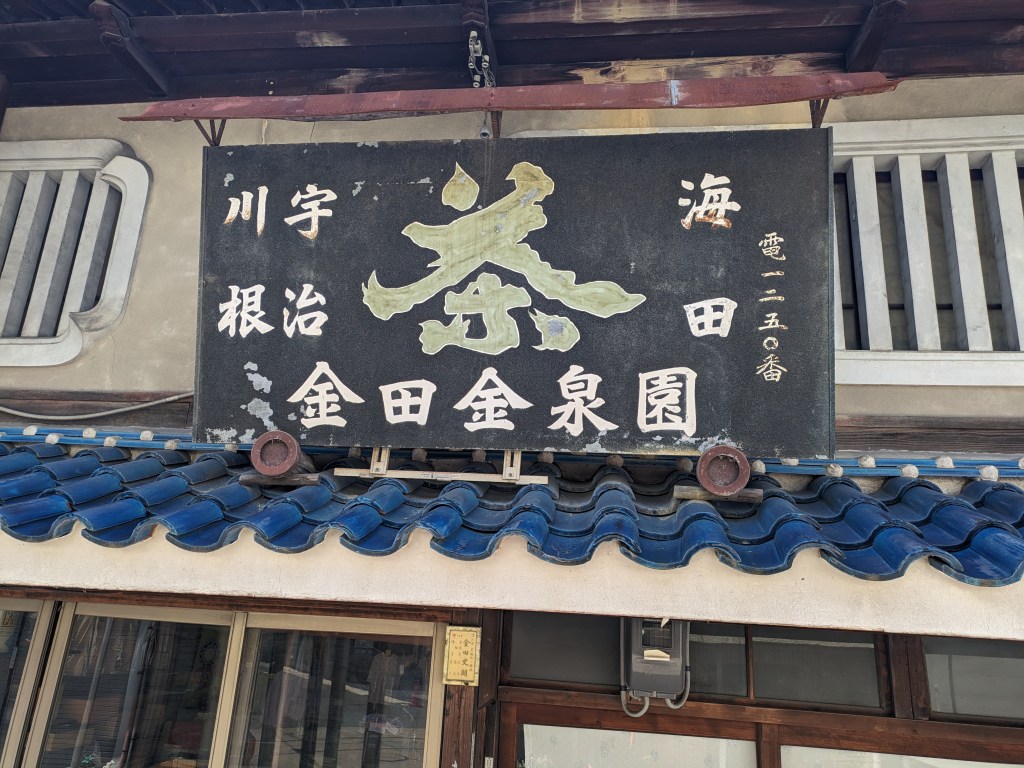
I hadn’t stayed in Tsuyama long but I was sorry to say goodbye to its glittering black tiled roofs and its untouristed shrines where the signs were monolingual, and where the independent shops, such as the tea shop pictured above, did a decent trade.
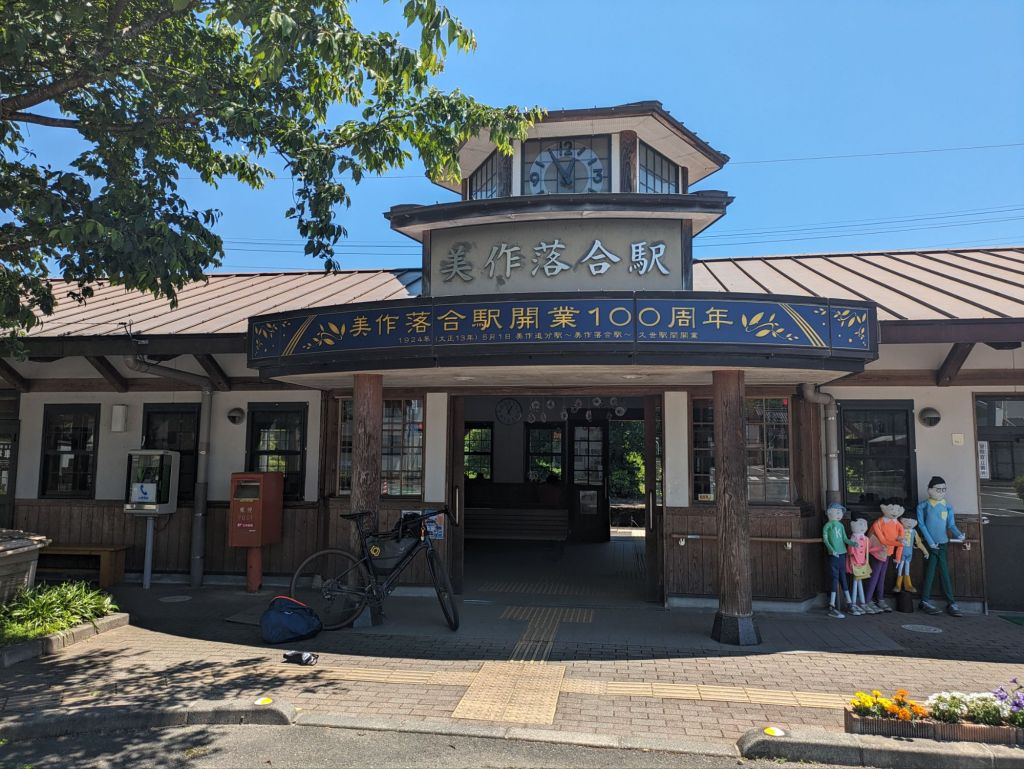
I pushed on to Mimasaka-Ochiai, 75 odd kilometres from Ohara. The woman behind the station counter was cutting flowers into a bouquet and I was happy to watch her at her work, in no rush for the 3-hourly train to Niimi. The station was one hundred years old and had a classic charm, and the station-master-florist was friendly too. Another woman came out of an office to watch me take apart my bike.
“Cycling to Sata? I’ve seen that on the telly.”
NHK filmed two foreigners making the trek.
“Well, take care.”
When I got to Niimi an old man in a sun hat and mask sat on a bench and watched me reassemble Ribena.
He pulled his mask aside as I was preparing to leave, speaking the slowest Japanese I have ever heard and enunciating each and every syllable.
“What – are – you – doing – in – Niimi? It’s – the countryside – here.”
Alan Booth was asked the same question the moment he had arrived here too.
“I’m cycling to Hiroshima and Niimi is on the way.”
“Hiroshima? But that’s a long way. There are hills and everything.”
I told him I would be OK.
“Your – bike – is – cool,” he said, and Ribena growled at him. I was the model of politeness.
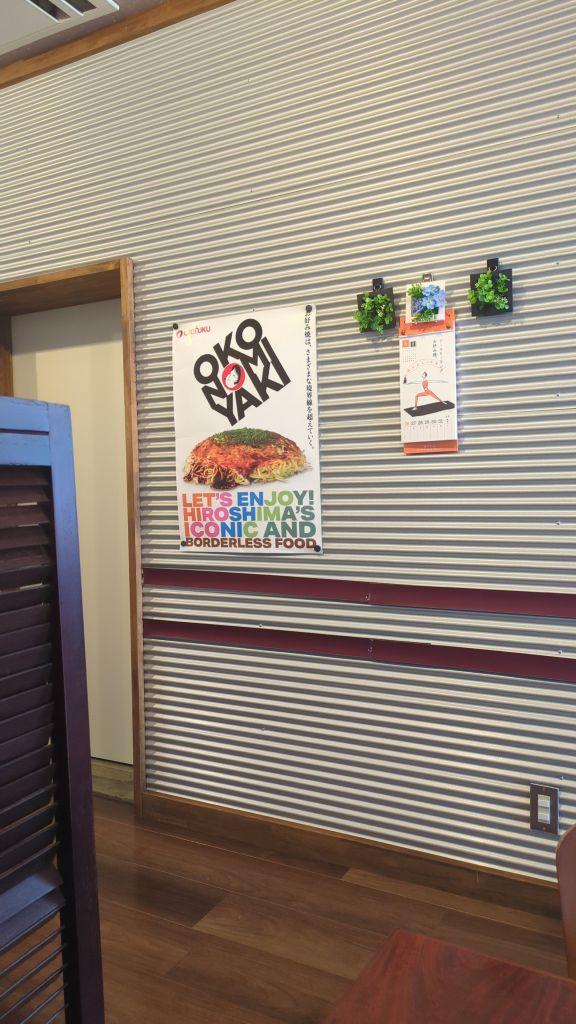
I cycled around town and, by chance, found an okonomiyaki place. Hiroshima is famous for it and it’s one of the foods I’ve been looking forward to.
The woman was wearing a funky cap, a red shirt with a black waistcoat and slightly flared black trousers. She was listening to Ella Fitzgerald era jazz. I put her at about 60. She later told me she was 84. She’d had the shop for 45 years, built it in a rice field when there was no city and when the road came through it passed in front.
“People from the hotel come in at 6pm to eat. What are you doing in Niimi?”
When you’ve been looking forward to a particular dish there is nothing more reassuring than an 84 year old cooking it for you. Sure enough, it arrived plump, slathered in sauce and piping hot.
“What time are you open until tonight?”
“8pm, but you should go to the Okinawan place behind here All the young women go there. Of course, if you have time you’re welcome to come back here and drink a beer.”
I thought vaguely about cycling out to the university, but I spied a cafe in the way and stopped there.
The owner, a woman called Mizuho, knew all the local ALT teachers.
“Three of them were in just 20 minutes ago.”
She spoke good English and we chatted while I drank an iced coffee. She ran three businesses, the cafe, its attached dance studio and also gave massages. She had gone to Tokyo when her father’s job had moved there, but returned to Niimi as an adult. She taught jazz dance but all the students wanted to learn hip hop and k-pop.
A Japanese man had come by her place when he walked the length of Japan from Okinawa to Hokkaido.
“It must be you, you’re attracting the crazy people,” I told her.
She told me that the woman in the okonomiyaki place’s son ran the Okinawan restaurant.
I was keen to meet the ALT teachers without seeming like an old creep, so I laid a trail of breadcrumbs telling her where I was staying and where I’d likely eat. After I’d had my photo taken outside I asked her to say hello to all the ALTs for me.
“What a pity, they are having a BBQ tonight.’
Must be, I thought, it’s a Wednesday.
I went to the Okinawan place and ate Goya, a dour-tasting green super food. The menu on the wall has akatori tataki – seared, slightly raw chicken – basashi – raw horse meat from Kumamoto, and ume budou – a kind of seaweed that looks like green ikura. I toyed with the idea of the raw chicken. A friend of mine had tried it once and ended up in hospital. I decided not to take the risk, despite what people in Reddit were reporting.
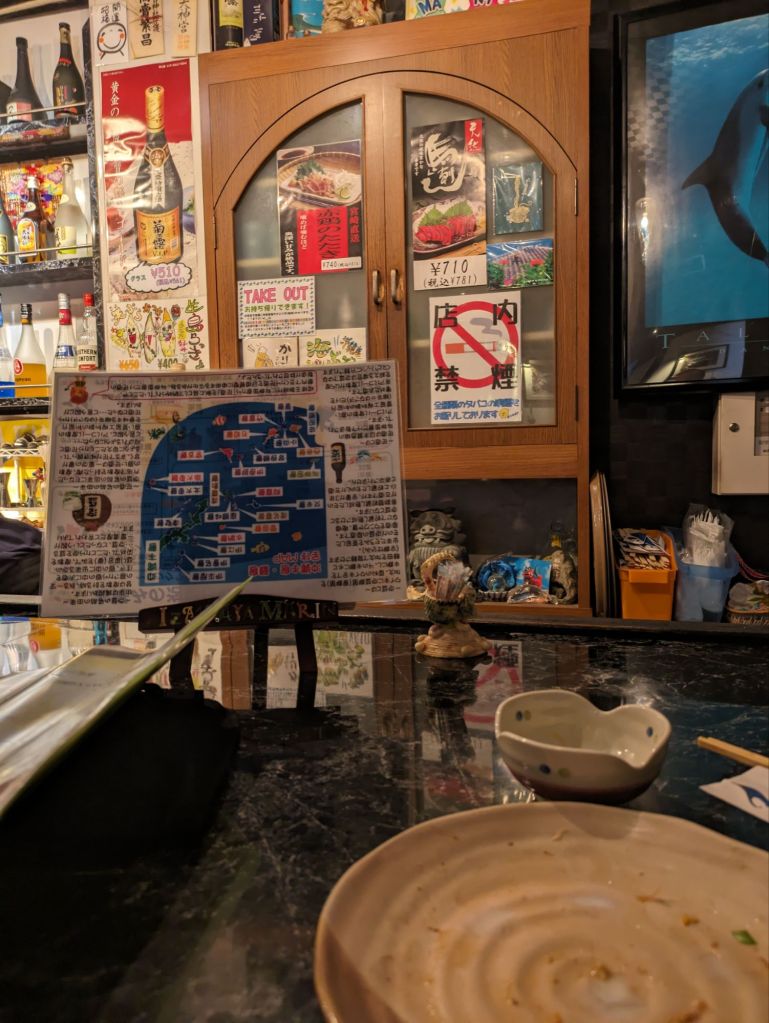
I ate soba and no young women or ALTs came in, happily. At my age, there’s only so much adventure you can take.



 The Himedomachi Cycling Club
Leave a comment