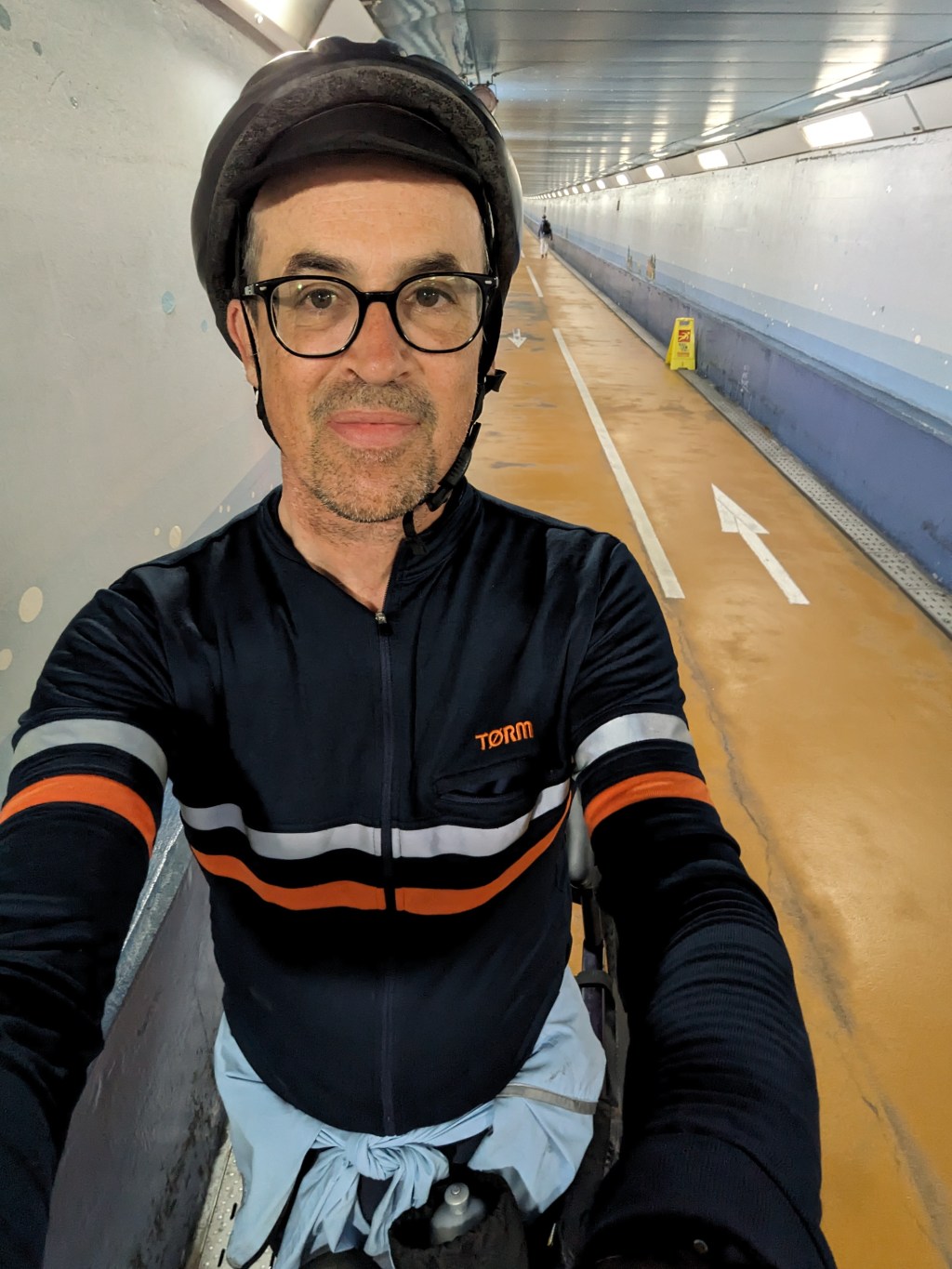
I got to the tunnel at 6.15, and paid the ¥20 fee for taking a bike. The tunnel runs for 780m under the straits and the elevator takes a surprisingly long time to descend. When I got to the bottom the woman who had taken the elevator before me was a long way ahead. In fact, the tunnel was busy with men in tracksuits and older women power walking along it as if it was a running track. Two old ladies in face masks bid me good morning. The sounds of the cars and the trucks crossing the road bridge high above our heads filtered down to us, and the sound of running water came out of the vents.
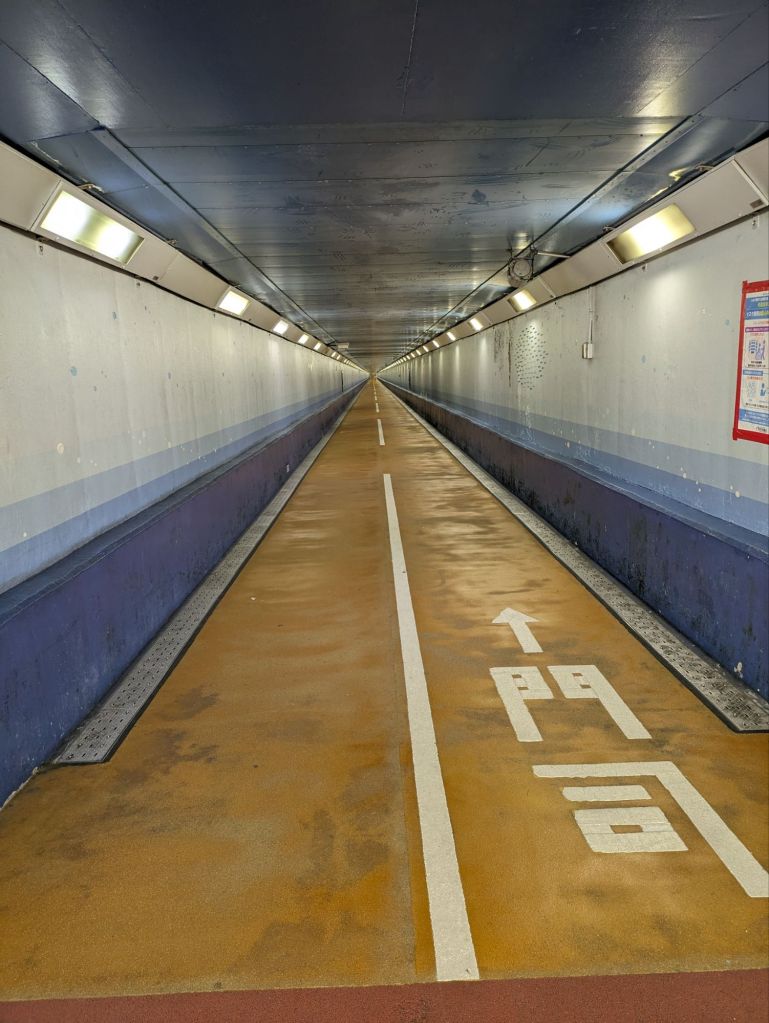
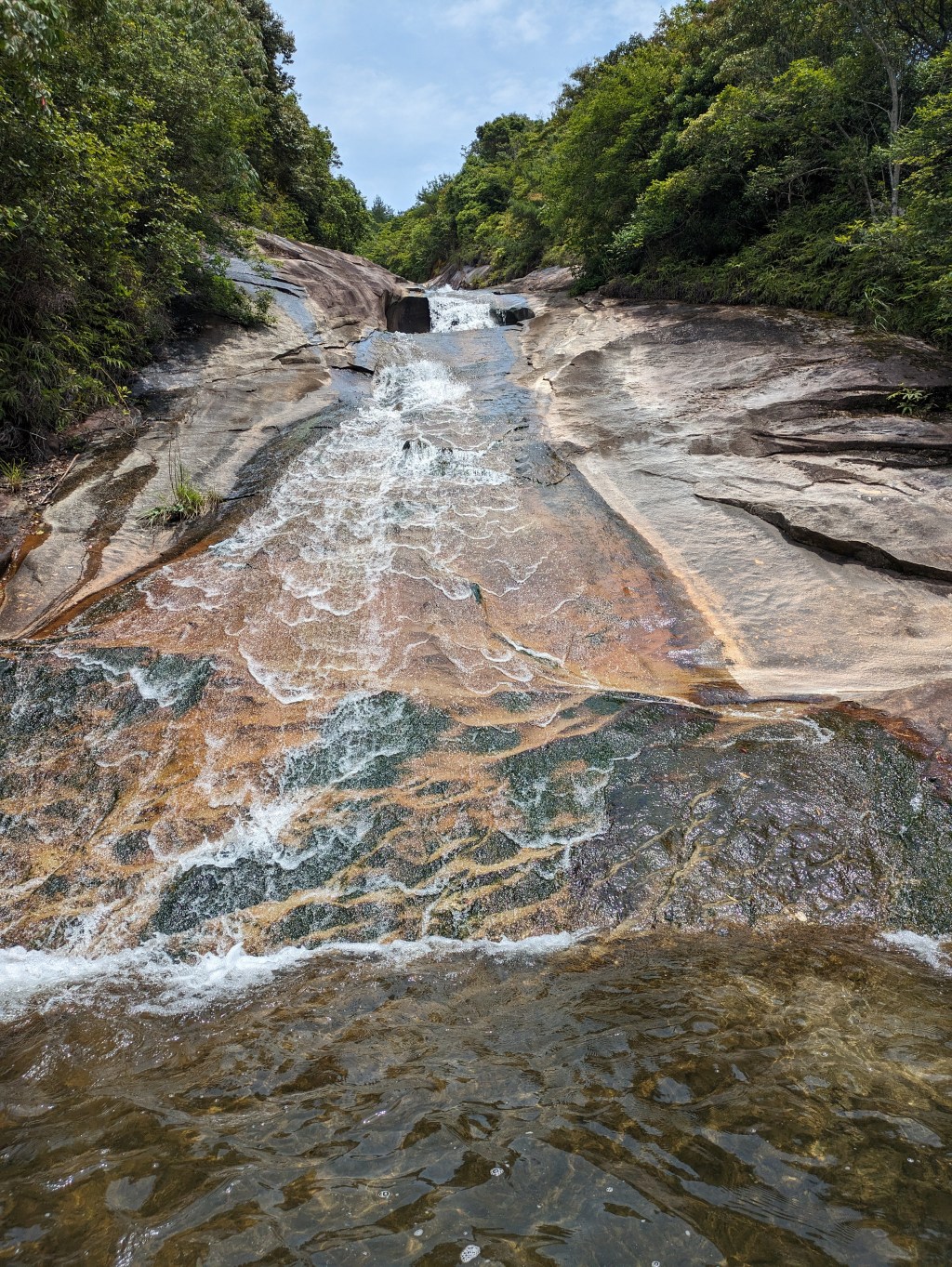
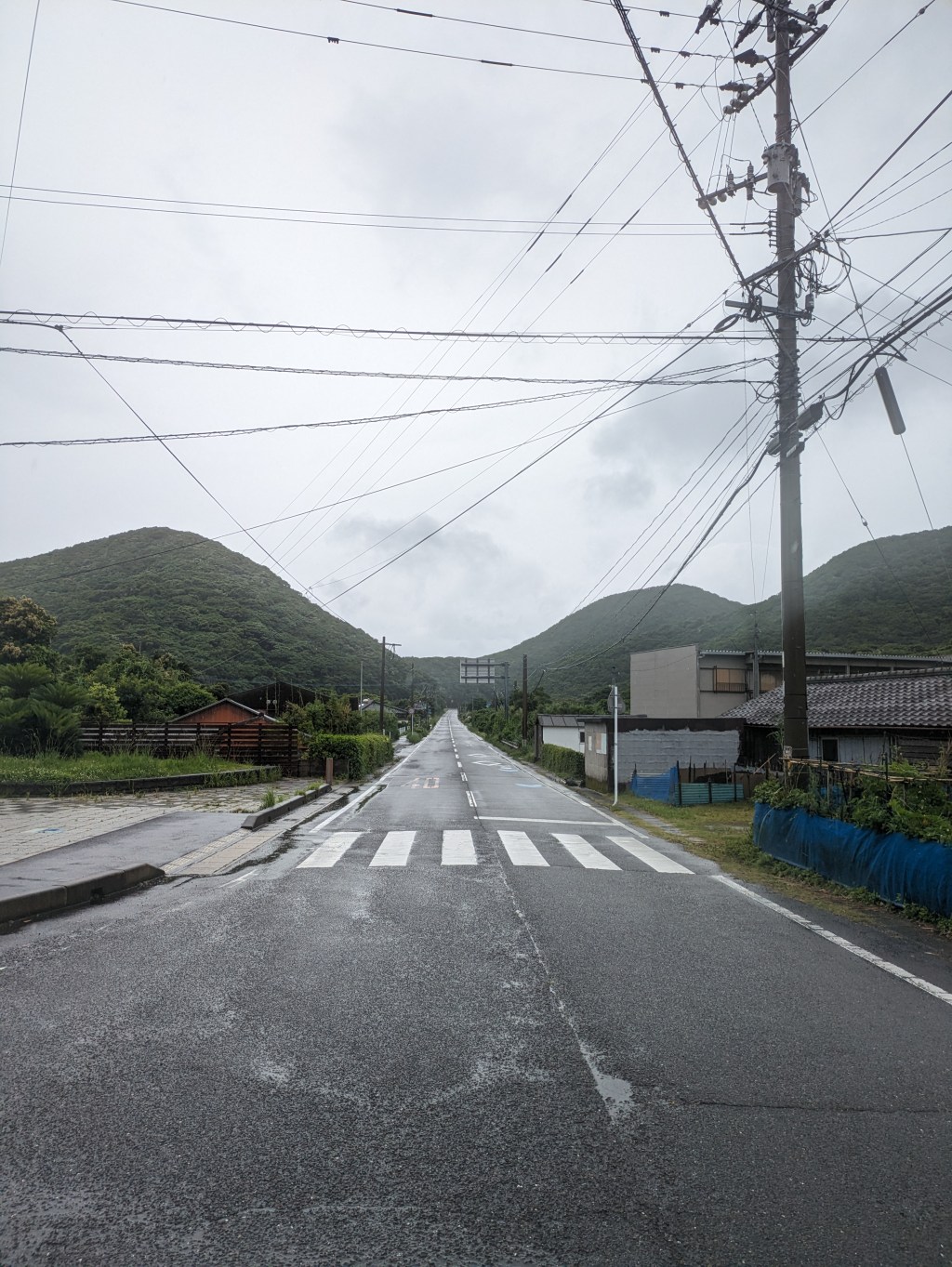
I surfaced several minutes later in Kyushu. The sun was already hot, but a cooling wind blew in the shade. There was nothing on the road. Something leaped from the bushes and I made an involuntary, “Wah!” sound. In a tiny village on a perfectly straight and empty road a mother walking her child to elementary school pressed the pedestrian light. I passed a waterfall where the town had installed a slide which ran in rollers. A father, a mother and a child came down it, the mother whimpering in pain at the rollers. I laughed and commiserated with her, then later I thought, “You don’t even know where butt pain starts lady.”
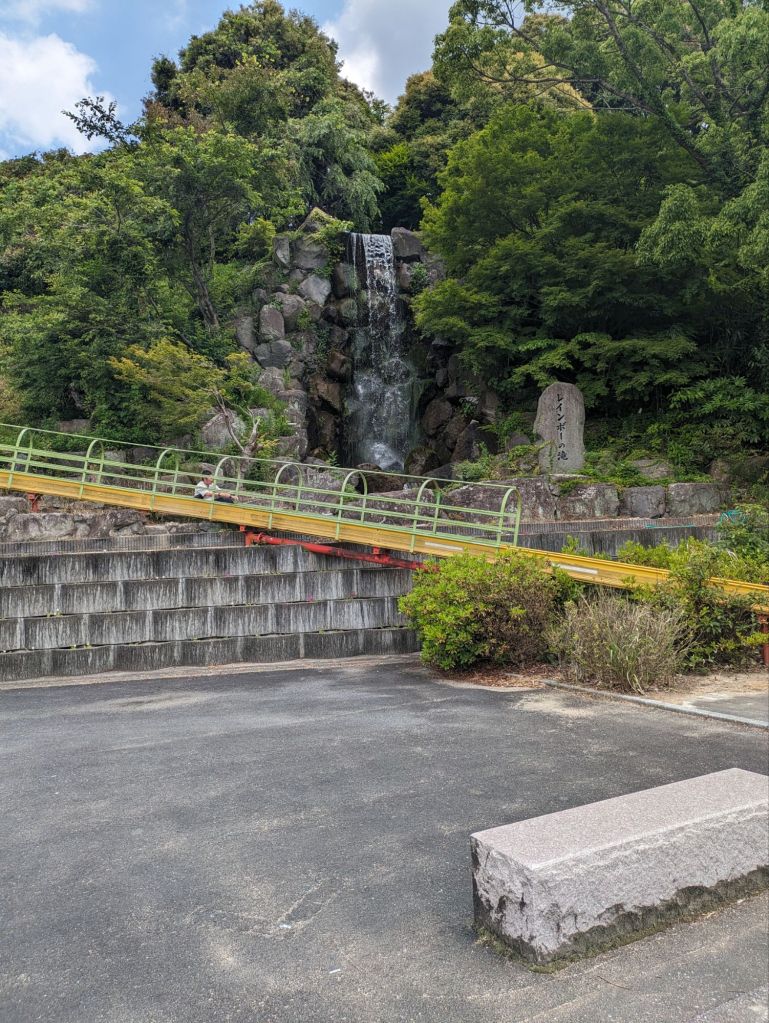
I felt like I was delaying the inevitable. That at any moment I’d hit traffic and I’d be surrounded by cars and vans and trucks, and it almost never happened. Just as I thought that Kyushu’s pavements were as wide and as nicely laid as the cycle paths I’d used in Denmark, a bamboo frond tried to whip my handlebars out of my hands and then a vine tried to garrotte me.
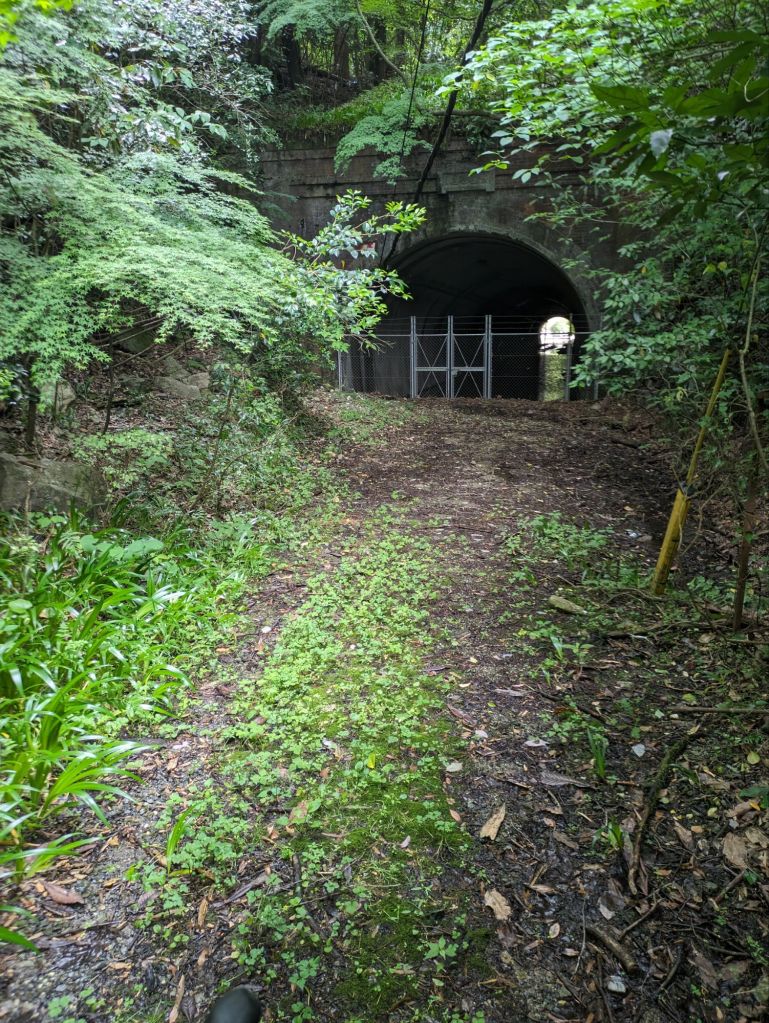
I hit traffic briefly on the climb to the only tunnel through the mountains. I had checked this tunnel out and had mapped a side road that would detour past it. I climbed a steep hill along a narrow road. An 80-year-old woman stood at the top with her dog. My Garmin told me to go right, up a gravel track. The gravel turned to mud and ended at a tunnel that had been fenced off. A river flowed beyond it.
I went back to the busy road and dropped the little yellow Google man into the entrance of the tunnel. There was no pavement, just a climb. I watched the traffic. A traffic light further down the hill was a causing a minute gap between the cars and the trucks. Maybe I could get through? The tunnel was about 2 kilometres long. Unlikely, but it seemed to be the only option. Then it occurred to me there were two tunnels, one for each direction. Maybe there was a pavement on the other side? There was, and it was covered in bike tracks. I cycled through that way, safe from the incoming traffic.
I came to a foot spa. This is a natural water pool where you pay ¥100 and sit on a wooden bench on the side of the pool and soak your feet. A very friendly lady beckoned me in and showed me how to get a ticket from the machine. I handed this ticket to the man at the counter, who was supervised by another man. Then I soaked my hot feet for twenty minutes.
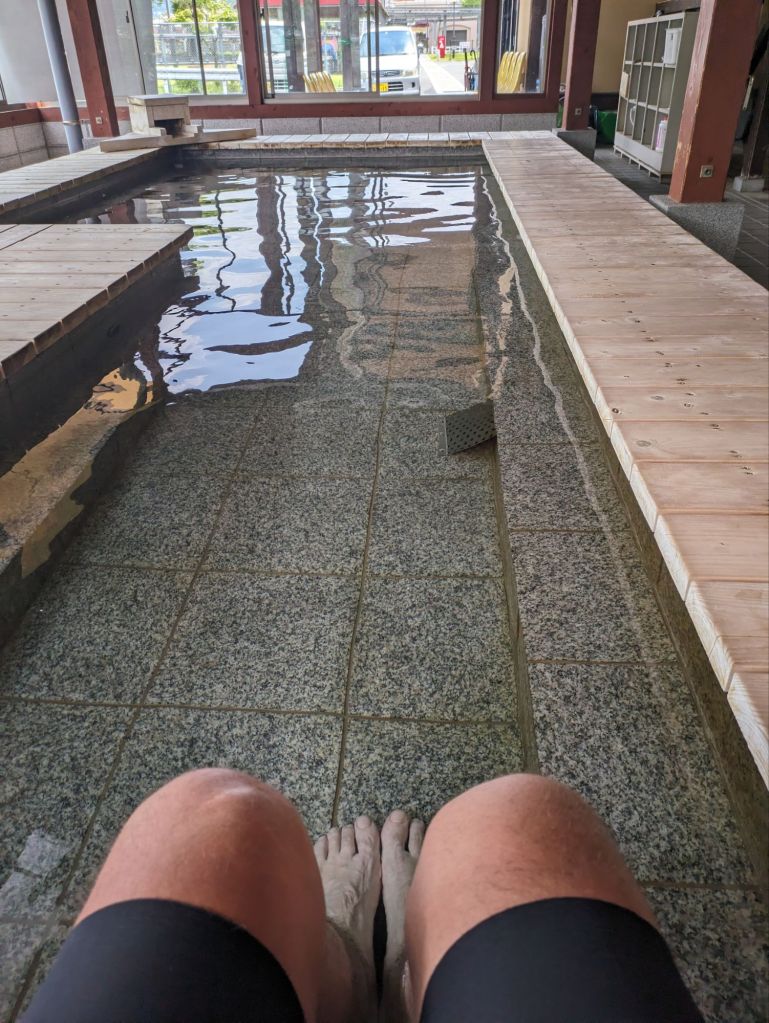
There were two climbs coming, a Category 2, 9 kilometre ascent, a steep descent, then a shorter Category 3 with an average gain of 9%. Sitting with my feet in the bath, there seemed to be a tunnel behind Hikosan station which would save me about 10 kilometres and avoid the climbs. Strangely, it didn’t have a name and the Google car hadn’t passed through it, but I resolved to give it a try as it would only be a short detour to investigate. I lingered so long in the car park after my spa, eating an ice cream (my first!) and faffing around that the manger came out to greet me and wish me luck, bringing the total number of workers to an astonishing four – all very kind and welcoming I should point out.
I cycled to Hikosan station which, although run by Japan Railways, is actually a bus terminal made to look like a station. The road and the tunnel are owned by JR and there were railway gates blocking the road and strict signs telling cyclists and motorcyclists to sling their hooks. I pedalled on to the first climb.
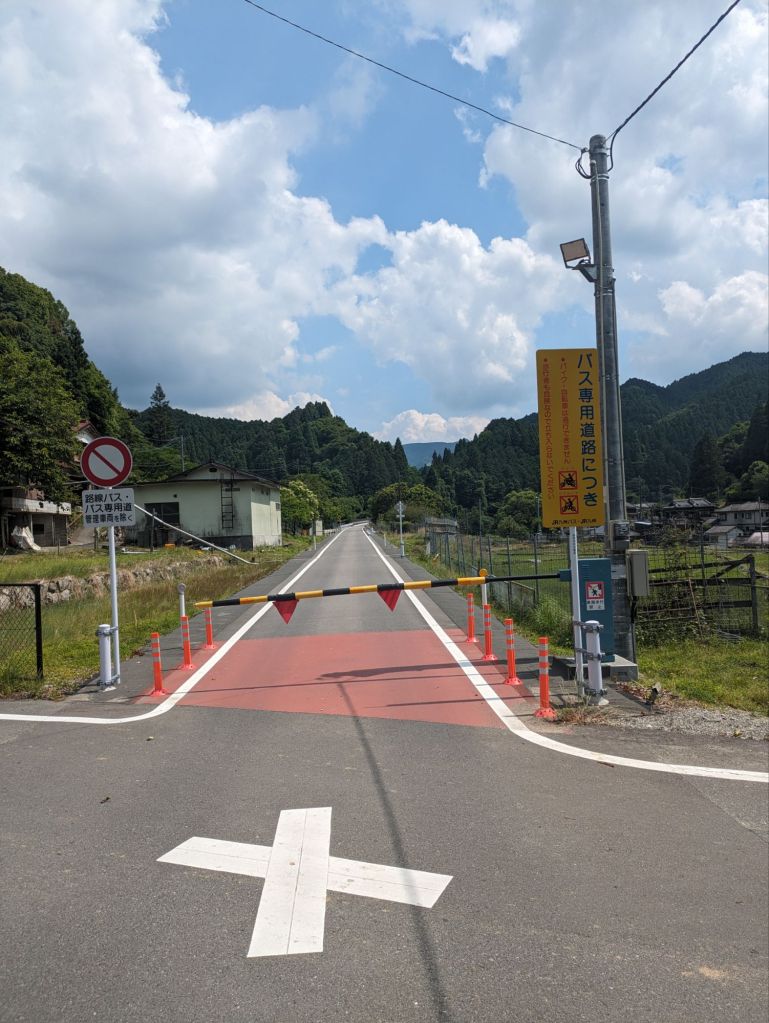
At the start of the first ascent workers from the Ministry of Staring at Mountainsides were out, staring at a recent landslide. They had covered the ground in blue tarpaulin and put up a high metal fence. Further up the road another landslide.
The road was full of hairpins that just kept going up and up. I met a man in a helmet and carrying a metre long ruler. He looked like the loneliest person in the world.
“I’m here to clean up the mountain,” he said.
I complimented him on the fantastic state of the roads in Kyushu and he looked at me as if I was a bit mad.
“The road keeps going up from here,” he said, with the satisfaction of someone with a car. I passed half a dozen of his co-workers going at it with strimmers. On the entire climb I met just one motorist. Other than that I was utterly alone. Sweat up the climb, love the view.
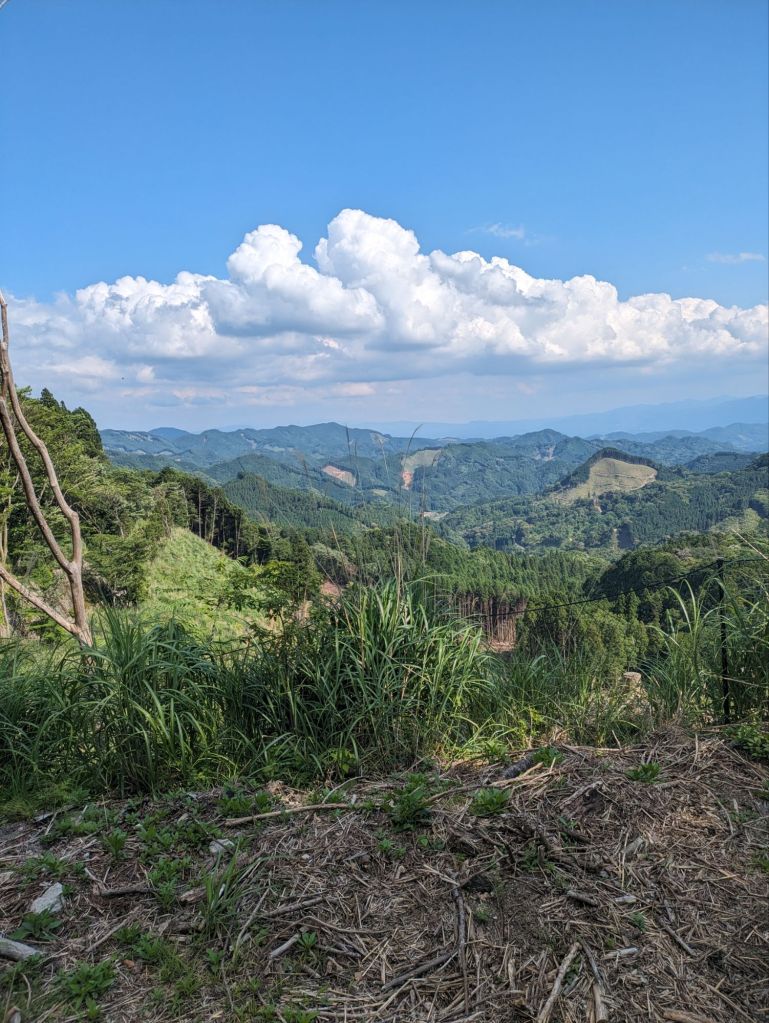
I descended through the terraces. These are like vineyard terraces you might see in the Lavaux, except flooded and planted with rice shoots. The mountains rose on either side and a breeze ruffled the waters.

I got completely lost. A farmer in a green baseball cap walked up to where I was poring over my screen.
“Where do you want to go?”
“Onta.”
“Onta Pottery Village? Go back the way you came. After about 200 metres you’ll see a big bridge. Turn right there. Keep going until you see three houses. Turn left there. It’s really steep.”
I cycled back up there hill, didn’t find the big bridge, but turned left at the first bridge I found. It led to a station where a ‘train’ was just arriving.

I crossed the tracks, could only turn right and soon found myself pretty much back where I started. The farmer pulled up beside me in his little white pick up as I was poring over my screen again.
“Did you get to Onta?”
“No. I followed your directions and ended up here again.”
“Put your bike in. I’ll drive you.”
Which he did, expertly driving me at speed up the ascent – cobbled but fortunately cleared after a recent landslide.
“We’re in Oita Prefecture now,” he said.
He dropped me at the entrance to Onta, having pointed out the stacks of wood the potters use for their kilns. I tried to give him a gift but he refused so I stood and bowed to him until he turned the corner, probably half expecting me to get lost and turn up in his rice terrace half an hour later.
I whizzed through Onta (I’m coming back in two weeks with Jules) losing all the altitude I hadn’t really earned as Ribena was in the back of the truck, and arrived in Hita. For the first time on this trip I heard the sounds of children playing.
I’m staying in a guest house in the woods. It’s attached to an outside bathhouse with four baths down by the river. I could only find one so I asked a guy from Aomori where the other baths were and he didn’t know, so he asked the only other bather, an old guy who knew the ropes.
“Just put those slippers on, they’re over there, down the path.”
I sat in a bath and stared down the river, massaging my legs and thinking nothing at all.
When I left the old guy was telling the Aomori person, “I’m 92 years old and I’ve bathed here everyday for 15 years. Where are you from?”
“Hirosaki.”
Alan Booth’s favourite town and where he believed he had once lived as a samurai.
I went to the neighbouring restaurant where I ate Wagyu, top quality Japanese beer-fed beef, which I grilled myself over a gas flame. It cost me CHF 12.
A good day, with all the best of Kyushu and tomorrow my ‘home city’: Kumamoto.



 The Himedomachi Cycling Club
Leave a reply to chrisinthailandc8eb48619e Cancel reply