I stayed with my kendo teacher and his family. His son lives down the road. His daughter was visiting with her children. She was ten years old when I met her and I haven’t seen her for seven years. The last time was when I visited with my family. She bought armfuls of fireworks for my kids and we let them off on the beach, sticking the rockers in the sand, throwing the bangers in the air. Now she’s married with two children. The youngest is 8 months old. Mrs Yamashita snr. carried her in a sling on her back.
We did kendo with the elementary and junior high school students. At the start of training I was asked to make a speech, which went on too long. I was asked to make another at the end and I kept it very short. “Continue what you’re doing. Always work from the basics. That’s it.”
A kendo friend came from neighbouring towns to fence with me. I felt rusty, yet I had more energy and more patience than when I left. The moment to strike would arise. I was often a millisecond too late and got struck but the panic to force the moment had gone. The next morning I rode around town.
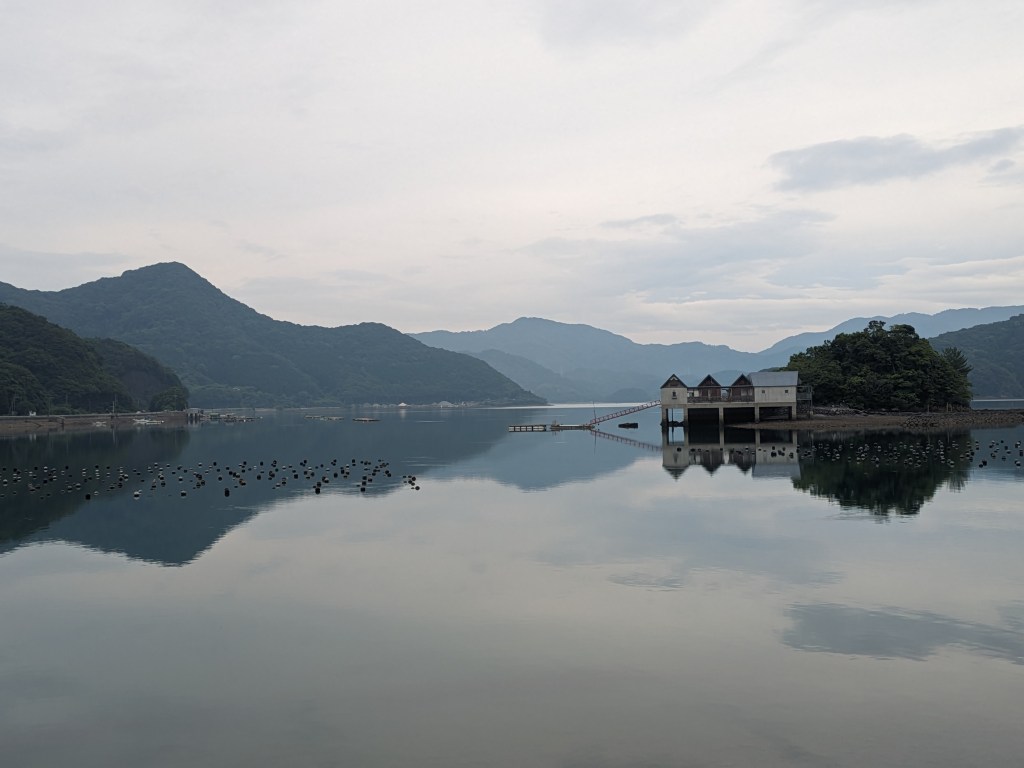
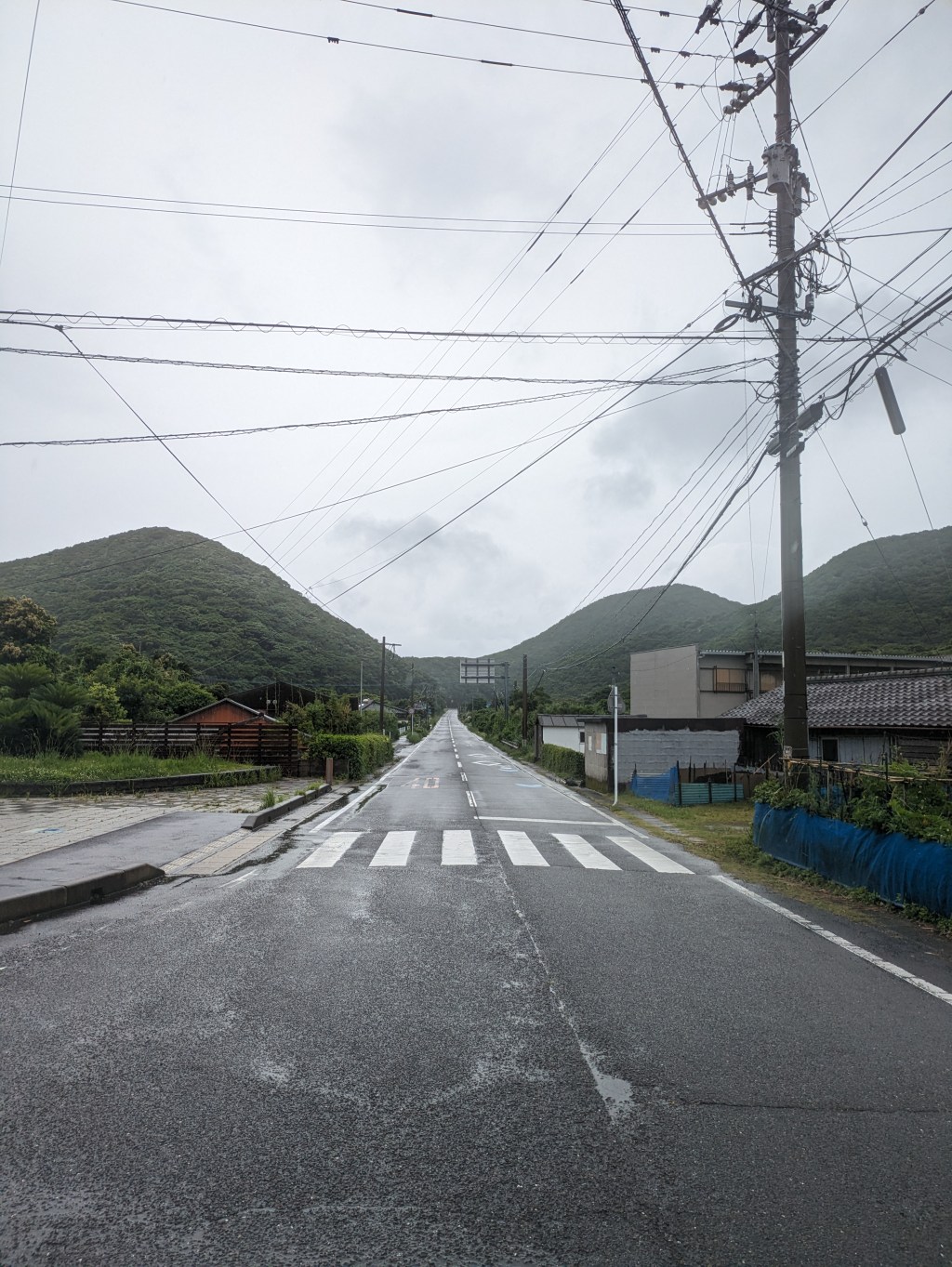
Himedo has three industries, boat building, a cement factory and fishing. Its population has halved in 25 years, but people still live here, work here. The schools are open and the shrines are cared for. Empty houses are knocked down, not left to collapse. There are gaps, very few young people, but there is no despair.
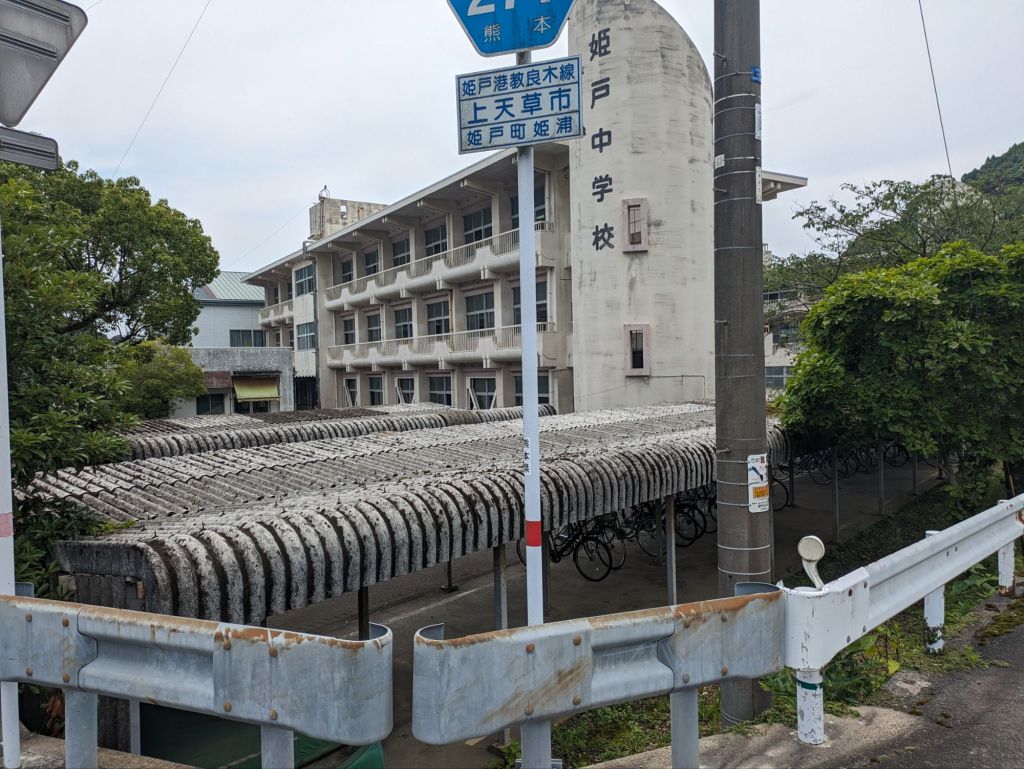
The petrol station, whose owner is a friend, only sells kerosene and diesel. The one customer in that time came in the hour I spent there to drop an empty can and have a pee. When I left the owner put up a well worn, ‘Temporarily Closed’ sign as he had to pop to the next town on an errand.
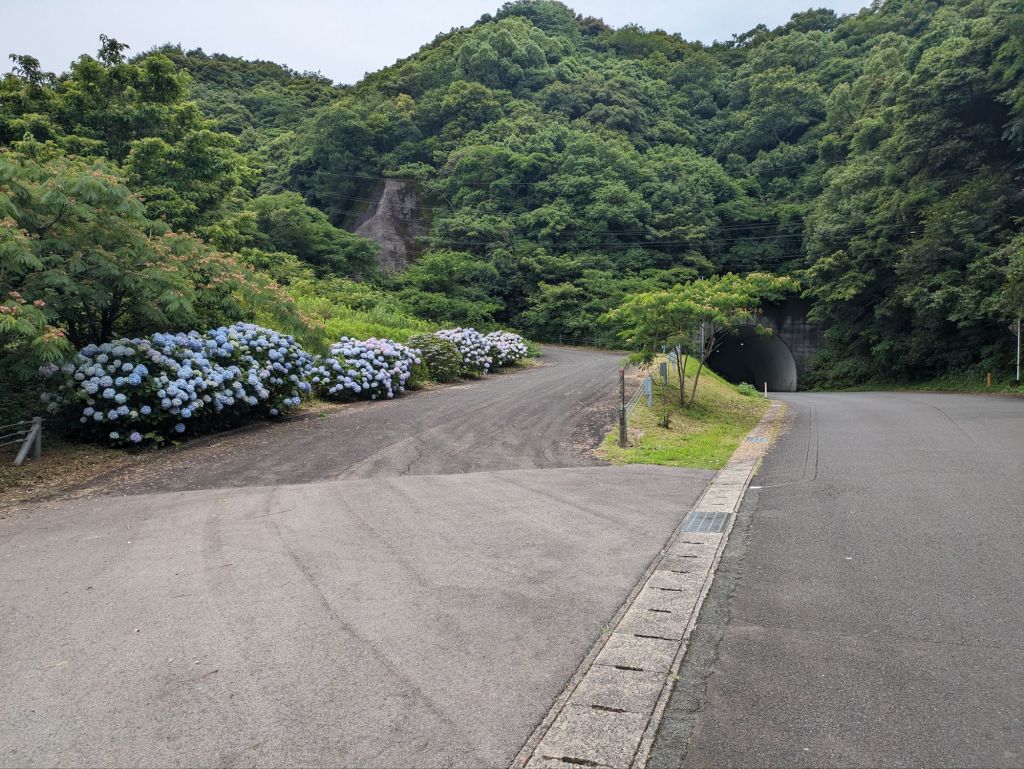
I cycled up the winding road to the pass. Jared had skidded on one of the corners setting the record time on the Hondo-Himedo run. I’d helped a neighbour with the flowers outside the Two Lunch Box tunnel, so called because before it was built walkers needed to bring two lunchboxes with them to climb and descend it.
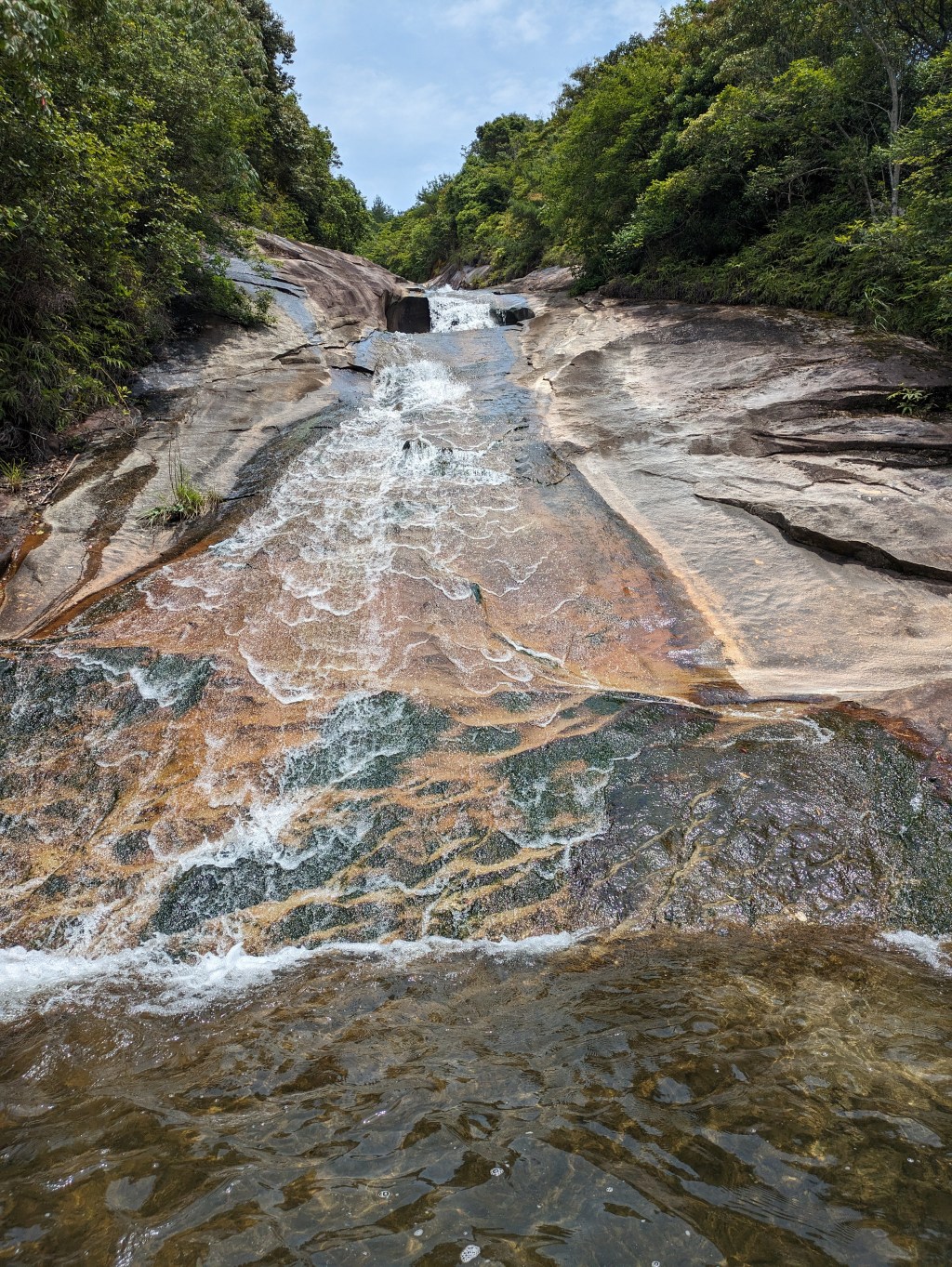
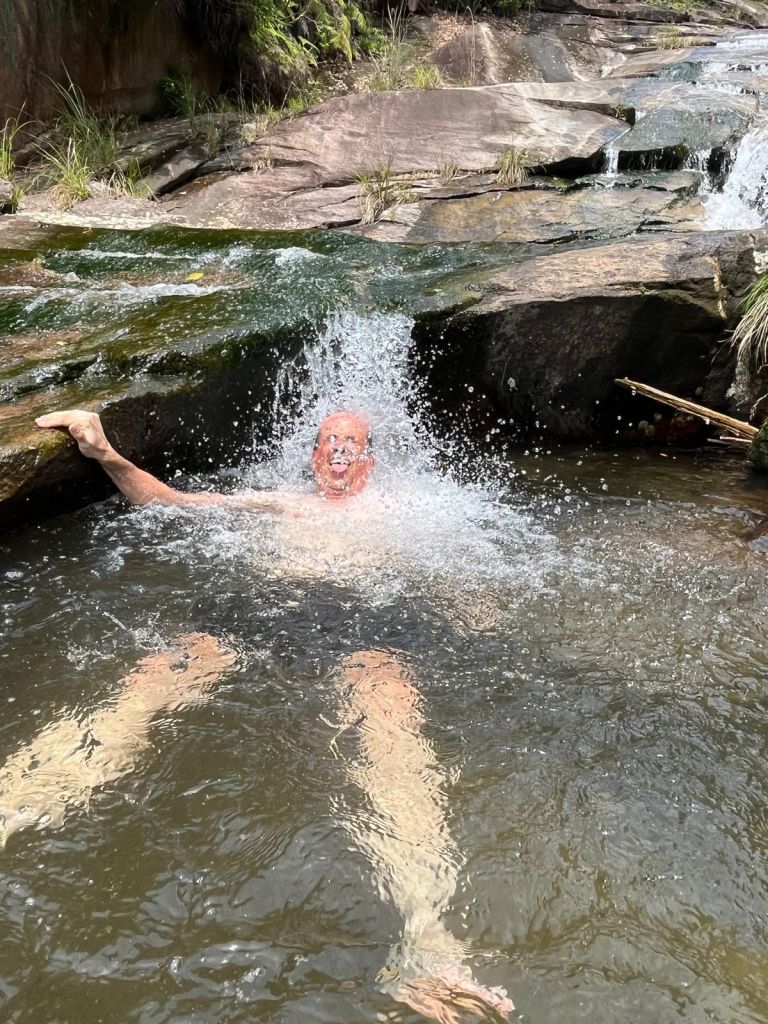
On the plains the rice fields were an electric, luminous green, a colour I’ve only ever seen in Amakusa. I met Julian at the waterfall pictured above. He made coffee in an Italian press on a camping stove and we picnicked on a rock. Then we stripped down to our undies and lounged in the pool at the bottom of the waterfall. Small fish nibbled at our legs. Piranhas lurked in the shadows.
We climbed up the waterfall where there were more natural pools.
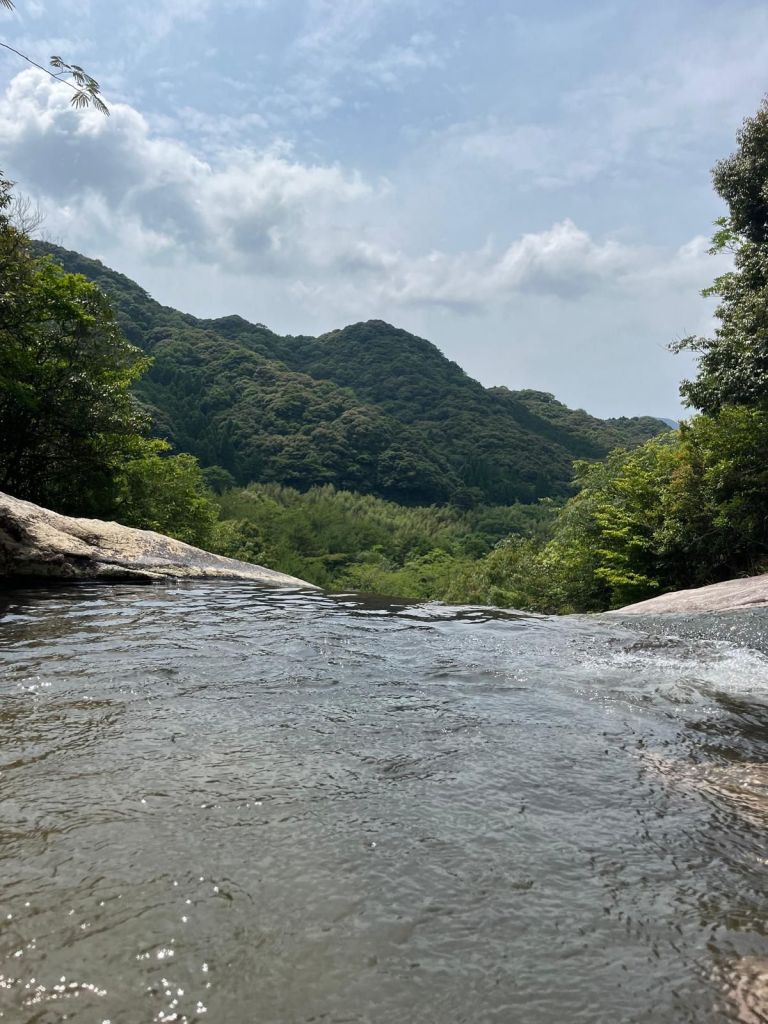
I said, “If this was in Thailand or on Instagram it’d be packed.”
It’s on Amakusa and is completely unspoilt. No one came. No one had stuck up a list of rules. No water pipe at the top to keep the tourists coming. Freedom.
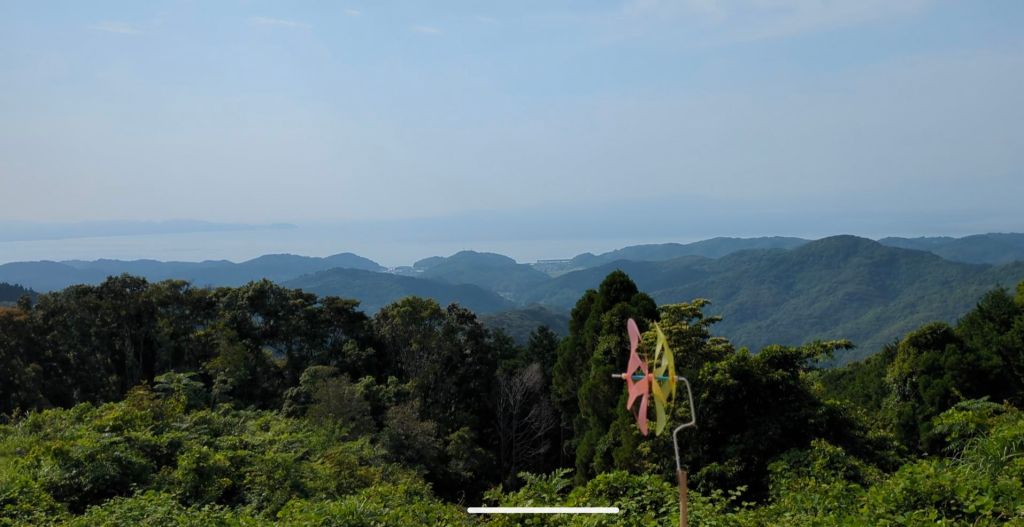
Julian knows every road in Amakusa and I submitted willingly to his soft propaganda. A climb labelled for cyclists with a cafe at the top where we stopped for ice coffee and a chat with the owner. She gave us free cake and, in that small island way, Julian and her worked out whether they had friends in common. We stared at the view until a flock of flying piranhas tried to turn us into supper. We were lucky to escape with our lives.
We continued through the back roads until magically his house appeared. We’re having a barbecue tonight and I’m hoping we’ll break into his fabled whisky collection.
We’re scheming about inviting cyclists to Amakusa and guiding them through its hidden treasures, with a side trip to Aso. Noodles and volcanos. Wagyu and sashimi. Sunsets and adventure.
“Stay another week,” Julian said.
I can’t. I’d never come home.
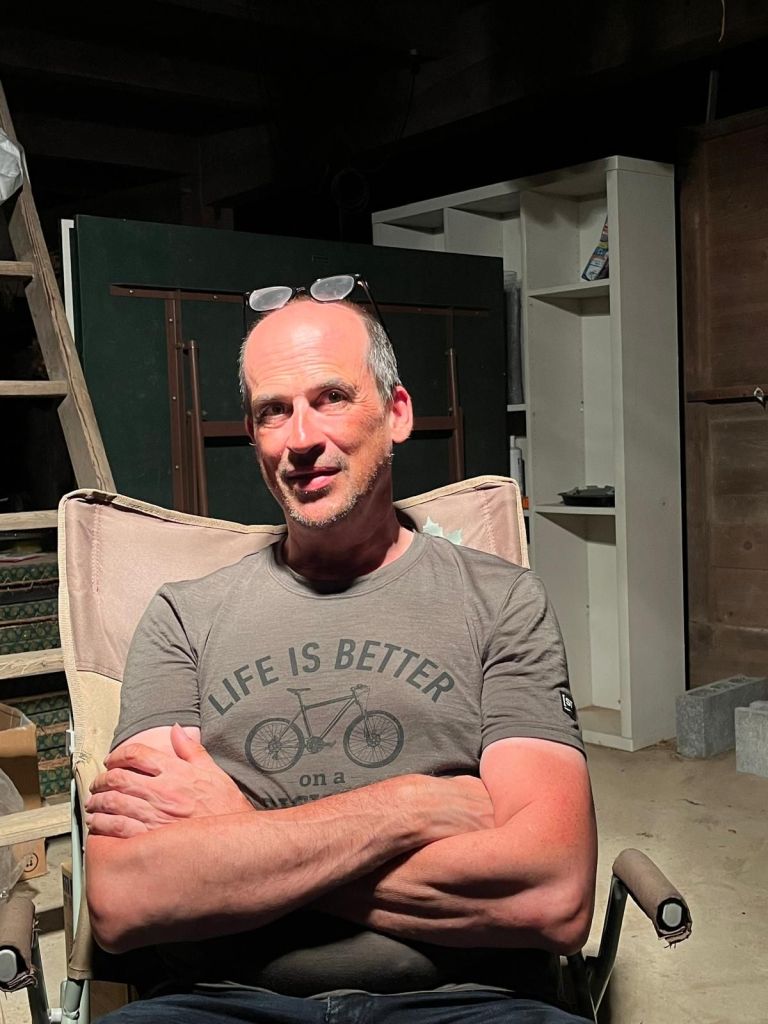



 The Himedomachi Cycling Club
Leave a reply to The Himedo Machi Cycling Club – The Himedomachi Cycling Club Cancel reply