
I gave Julian a pile of thermals to take to Amakusa. The weather is glorious and the forecast good. We went to McDonald’s and somehow managed to order 6 hash browns, which was, finally, the perfect amount. He drove me out of the city and into a bridge in the middle of the rice fields, where we unloaded Ribena and I filled my bag with the rice balls he made me. The road ran straight and true.
“See you in Amakusa then, mate.”
There is whisky at the end of the Sata rainbow.
My route ran more or less parallel to the 212, flowing through the fields and then following a channel of water until the Kuma River. Every time I surfaced at the 212 the trucks rumbled past and I asked myself how I’d stuck at it
During a rest stop, a hornet landed on the bottle of Pocari Sweat I’d lashed to my saddle bag.
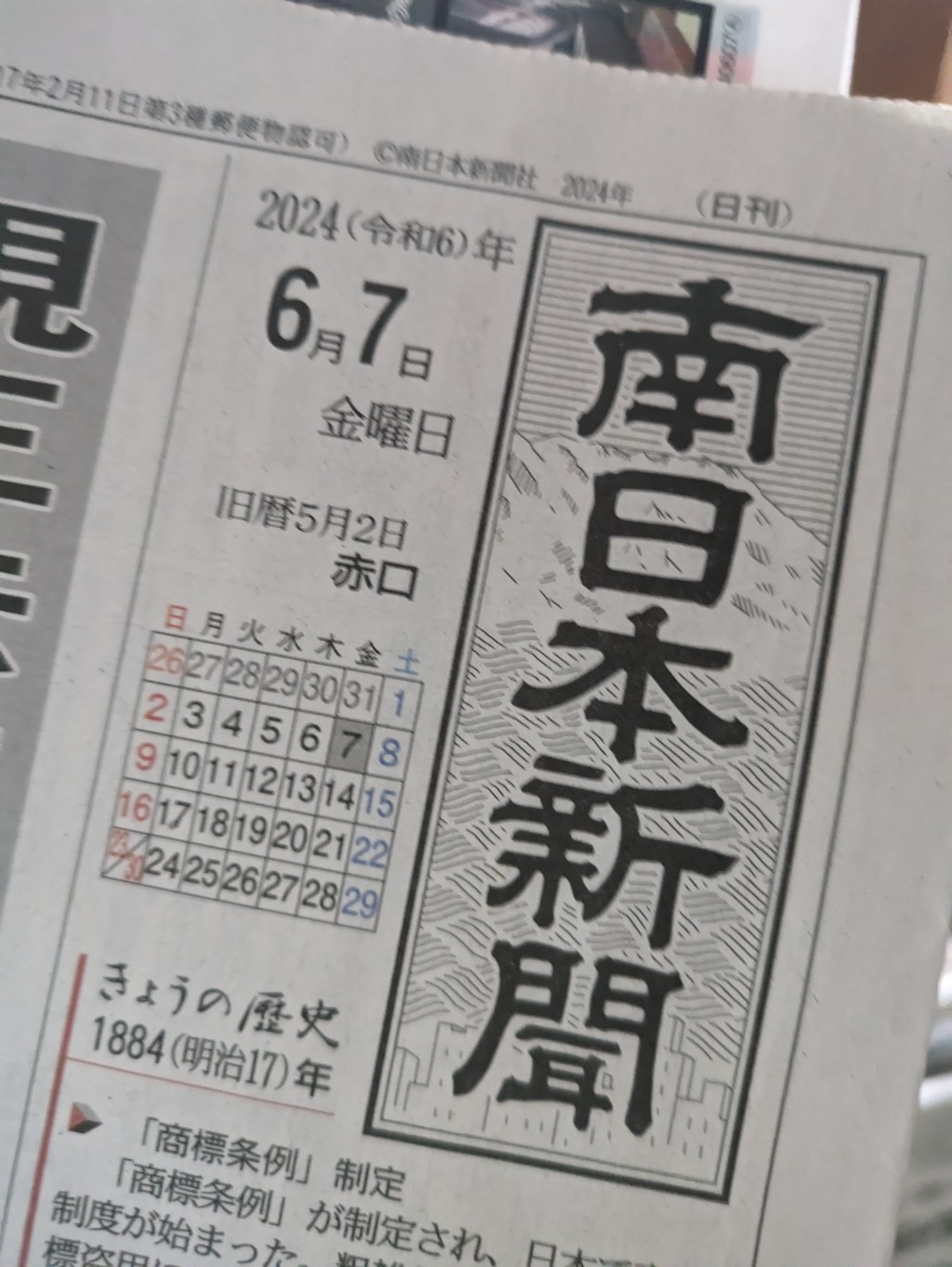
I’ve seen Japanese people pick up giant beetles and crabs, remain unmoved when cockroaches have scuttled across the floor, but when a hornet flew into the staffroom all the teachers freaked out. They have a vicious temperament and a nasty sting and newspapers only stun them.
I whipped this one away with my wind jacket then rode swiftly away while it was still confused.
I stopped at the Kuma Rapids. It was the first time I’d seen them. I passed my Kendo 2nd Dan in 1999 and I’d been interviewed by the Kumamoto news and my face made the front page. A friend at the Town Hall beckoned me into his office.
“Good,” he said, pointing at my photo. Then he opened the paper to another story. An Australian had been arrested for surfing the rapids after a huge flood.
“Stupid,” he said, tapping his head.
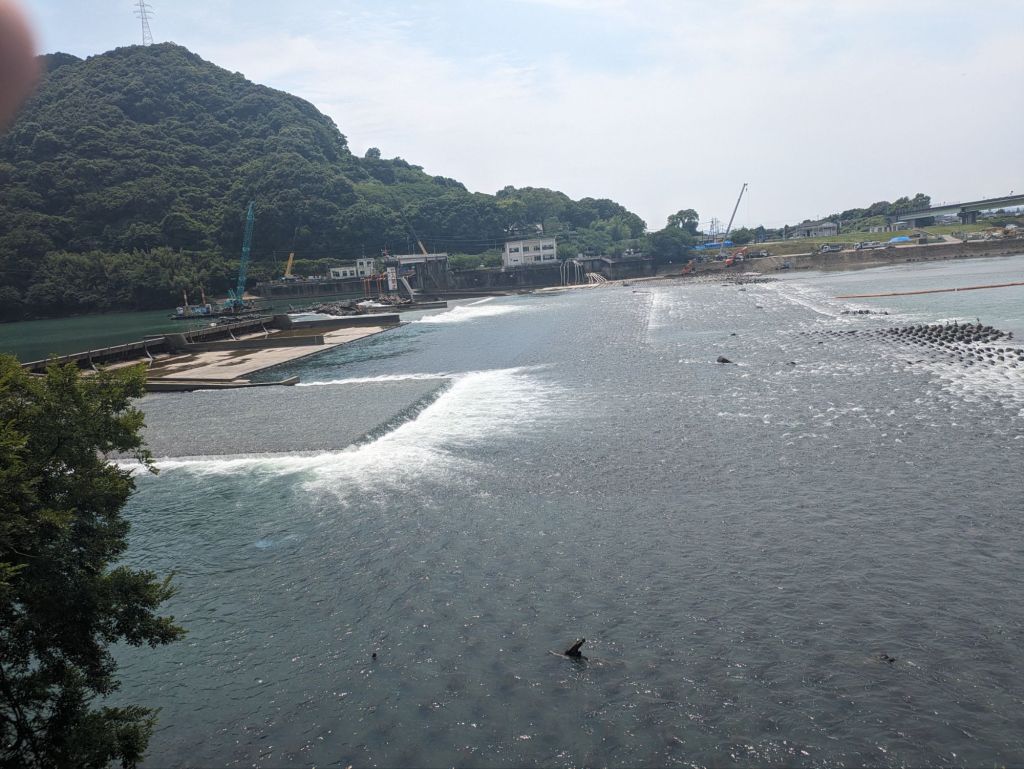
The 219 runs on one side of the river, and the smaller, untrafficked 158 on the other. Although they change sides a couple of times, my plan was to follow the 158 as far as possible avoiding the trucks and enjoying the view. What I couldn’t work out from Google maps was where the railway line was. It was marked on the map, but invisible to the satellite. From these modest beginnings grew one of the eeriest rides of my life.
I passed Dan station – an open sided waiting room facing the tracks, its back towards me and it crossed my mind that, in other circumstances I could have taken the train. Except I couldn’t. The tracks came into view and they were rusted and overgrown. Abandoned.
I passed Haki station and almost took photographs of its rusted bike shed, telling myself not to as it would be morbid. I was a few k in by this stage and there only people I’d seen were wearing hard hats and driving caterpillars down in the river banks, twenty metres below me.
I passed an akiya, one of several in an semi-abandoned town.
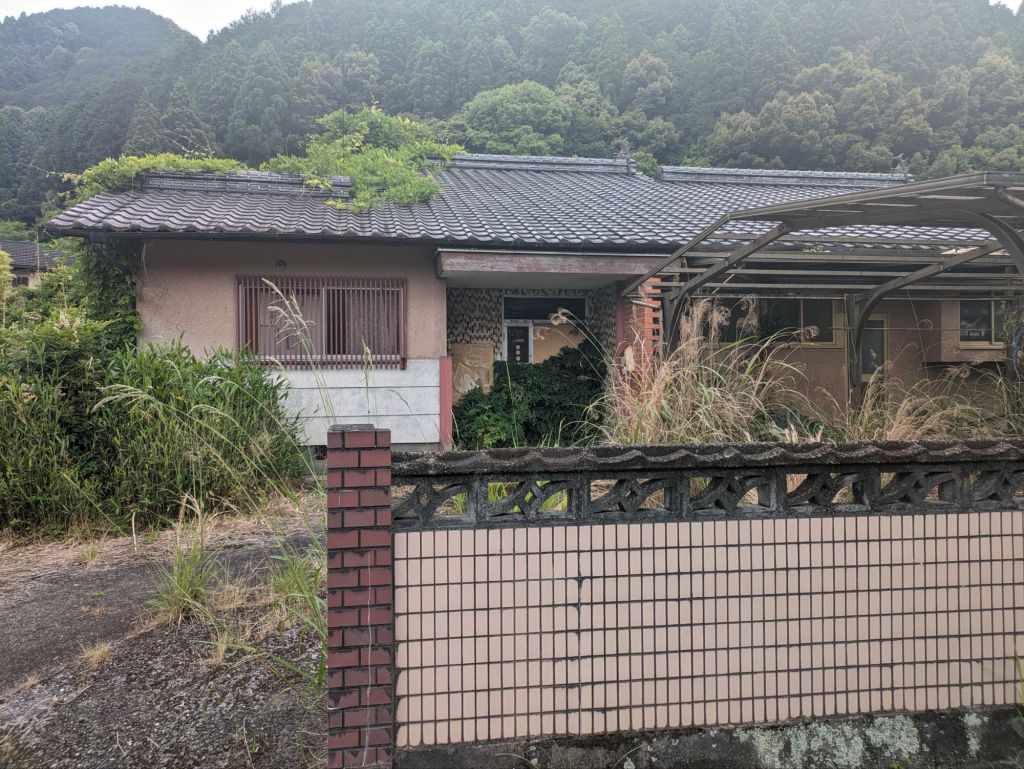
The forest overgrew the road and I began to feel that I was in the middle of no where. Then around a bend a man in a helmet, hi vis jacket and blue overalls swept tyre dirt off the road with a birch broom.
Red arrows pointed me into a short ramp on newly laid asphalt and I realised that, not only was I riding where the tracks used to be, I was pulling into Kamase station

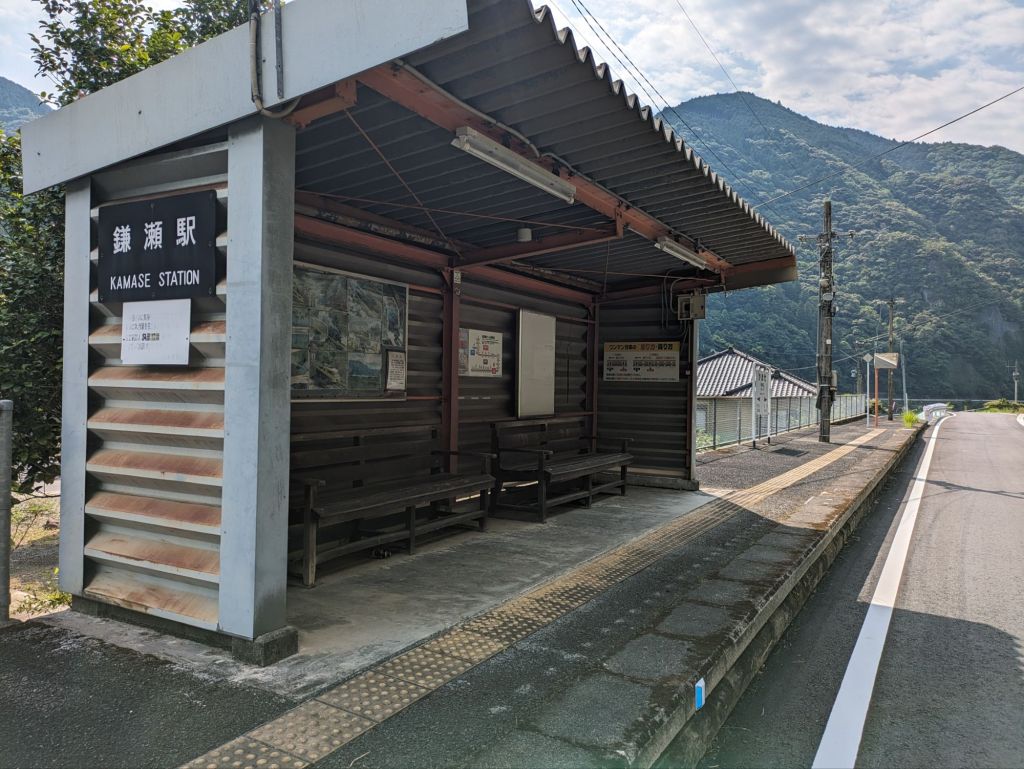
Down the road a red, metal rail bridge had collapsed in half and I realised I was cycling through a disaster zone. But which disaster, and when was it?

I passed a sign welcoming me to a town called Kumamura. The sign was jungle damaged and foliage was starting to cover it. After five kilometres I realised that the town had completely disappeared.

Roadworks on the 158 pushed me back onto the 219. I raced along it, taking the next bridge across to the 158. The villages I passed through were almost all deserted. I sat almost because washing hung from a few balconies amongst all the decay and some of the tombstones were being kept clean, while others grew mossy and dirty.
Across the river a derelict factory. When I paused to photograph it, something barked in the forest as if to say, “Go away. Leave us in peace.’

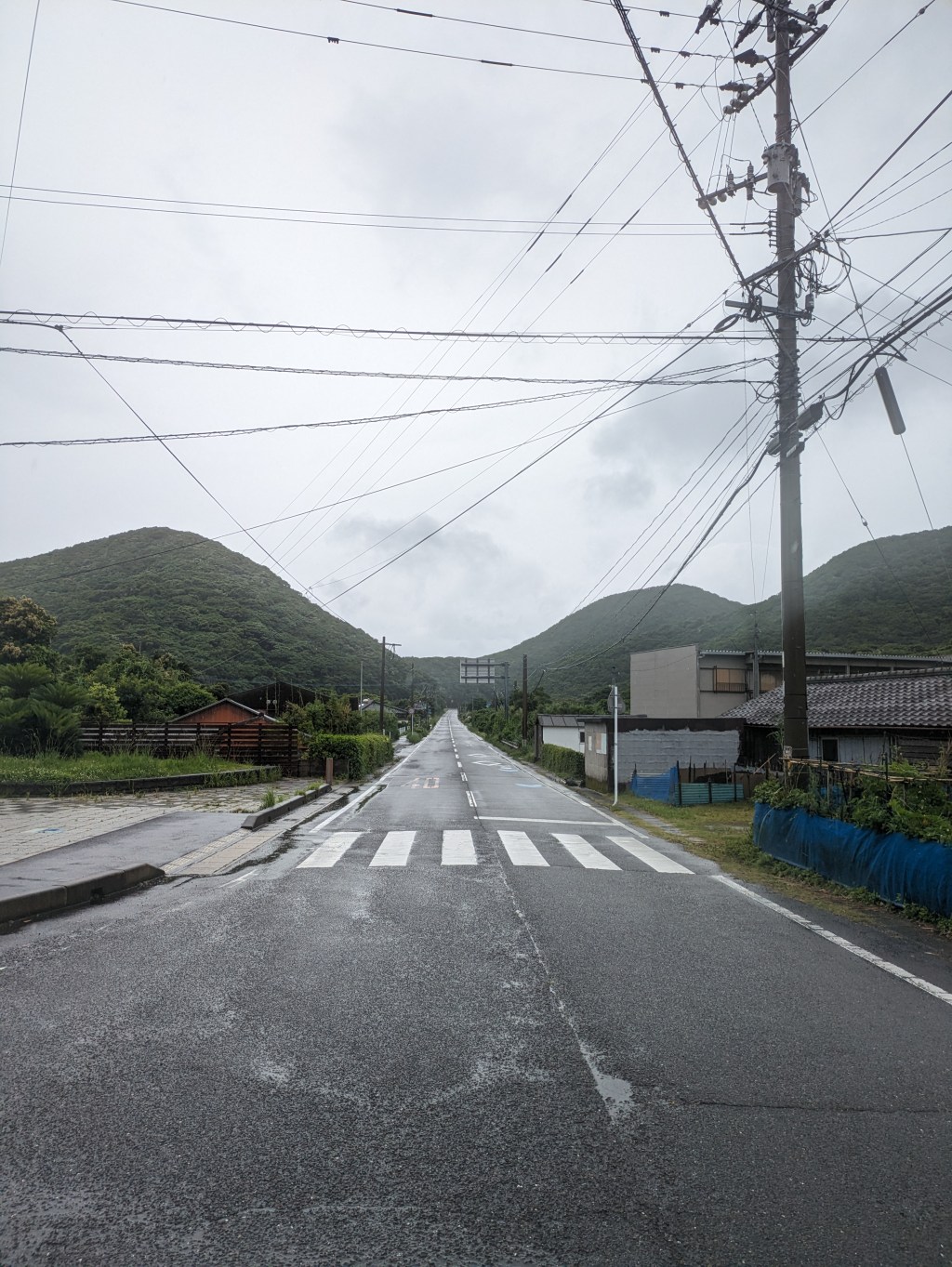
The only people I saw were the workers, digging with caterpillars, or walking between the empty houses. The only traffic – and I saw almost nothing – were work vans, and trucks carrying the dirt away. Jungle lined the road and the summer humidity was a prickle on my skin. I had that feeling in my stomach which I’ve had so many times on this trip, when you unknowingly slip into an adventure and you just have to ride with it, whether you want to or not.
The 158 curved up to another road. I looked at Google maps trying to work out where I was. This road was utterly silent and I took me whole minutes, in which not a car passed, to work out I was in the 219 again. Where had everyone gone?
It was 35 kilometres to Hitoyoshi City. I know because I counted them down. I stopped in one town, and took a photo of the town map. The date read Heisei Year 11 The rest of the map had bleached white in the sun and wind.

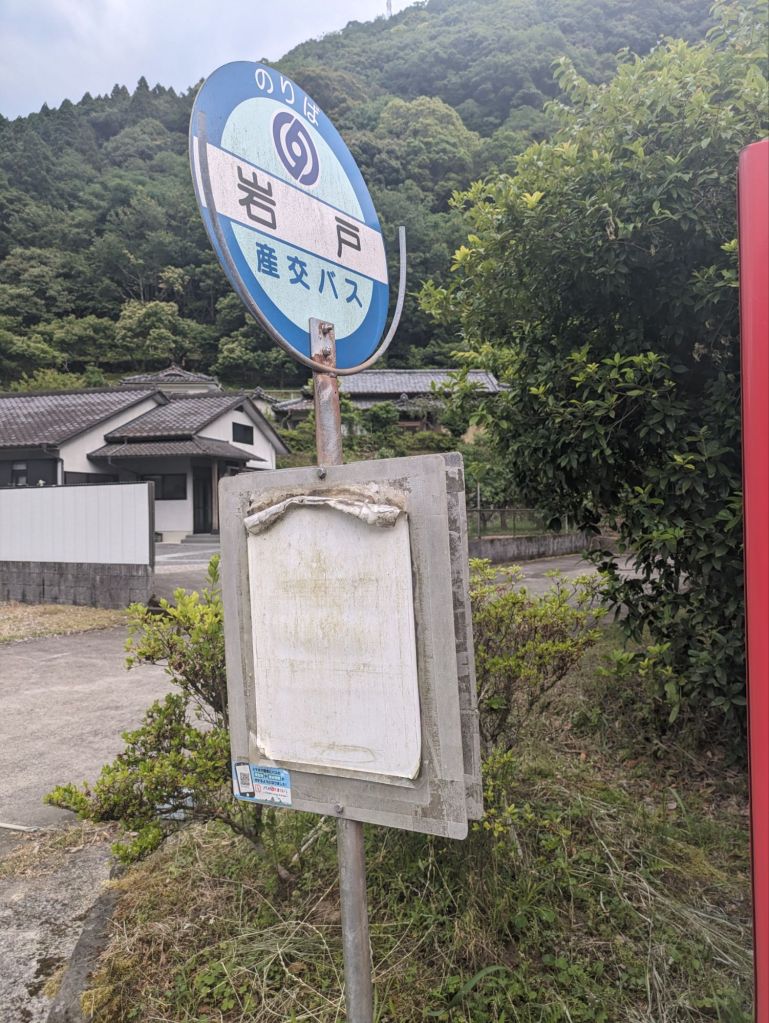
It stood beside a bus stop that hadn’t seen a bus in decades. A tourist sign pointed to a cave 100m off the road, which you couldn’t pay me to visit.
Incredibly, further down the road, a postman on a scooter passed me going the other way, so someone must live up there somewhere.
About 9 kilometres from Hitoyoshi, traffic began to filter back into the 219. I was escorted through a tunnel where there were roadworks. The guy with the red lightsaber walked me through and I asked him what had happened, an earthquake? A landslide?
“There was a flood, years and years ago.”
I still hadn’t put two and two together.
I switched sides of the river again, following the ghost train, totally engrossed in taking photos until a woman in a car gave me a hard look. Disaster tourist!
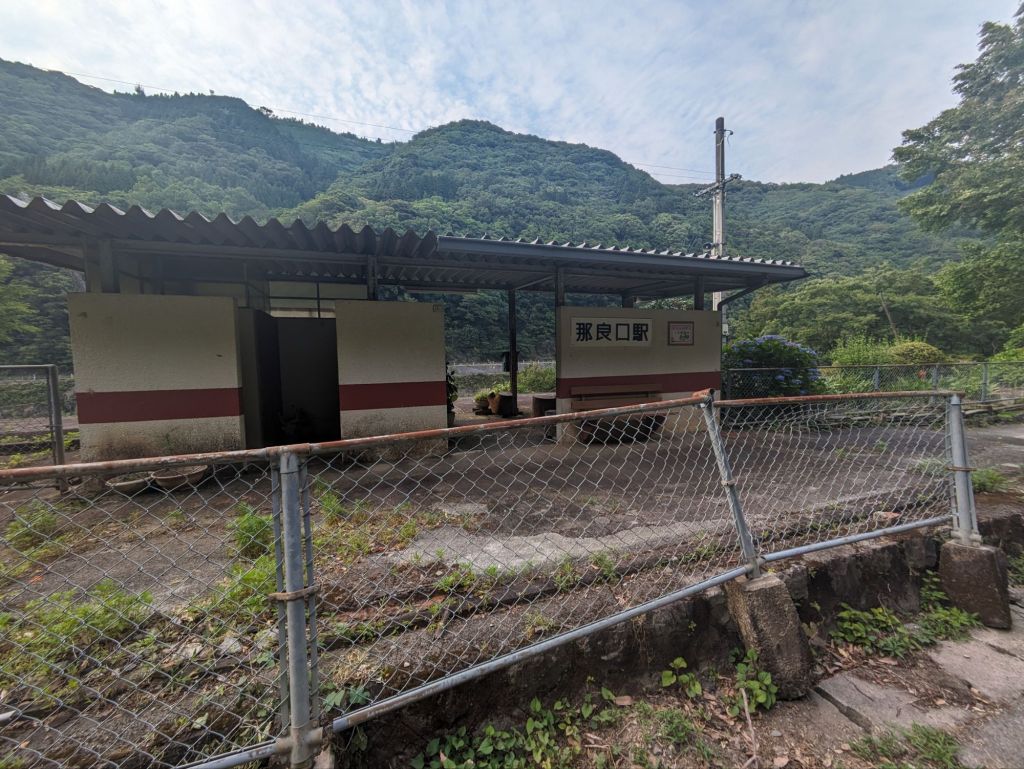
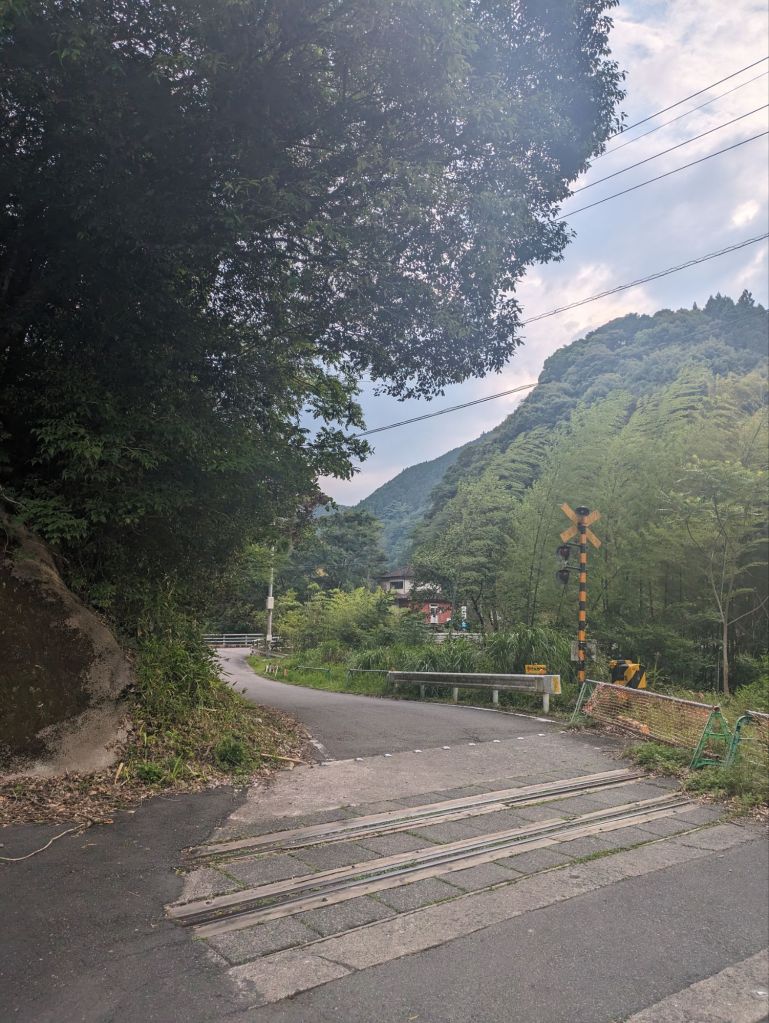

I got to the Lawson and finally the penny dropped. I looked up Heisei 11. 1999. The year I got my 2nd Dan, the year the Australian got arrested for surfing the Kuma, the year of the flood. They’d been rebuilding for 25 years. But to what purpose? The people were long gone. Everything was ruins.
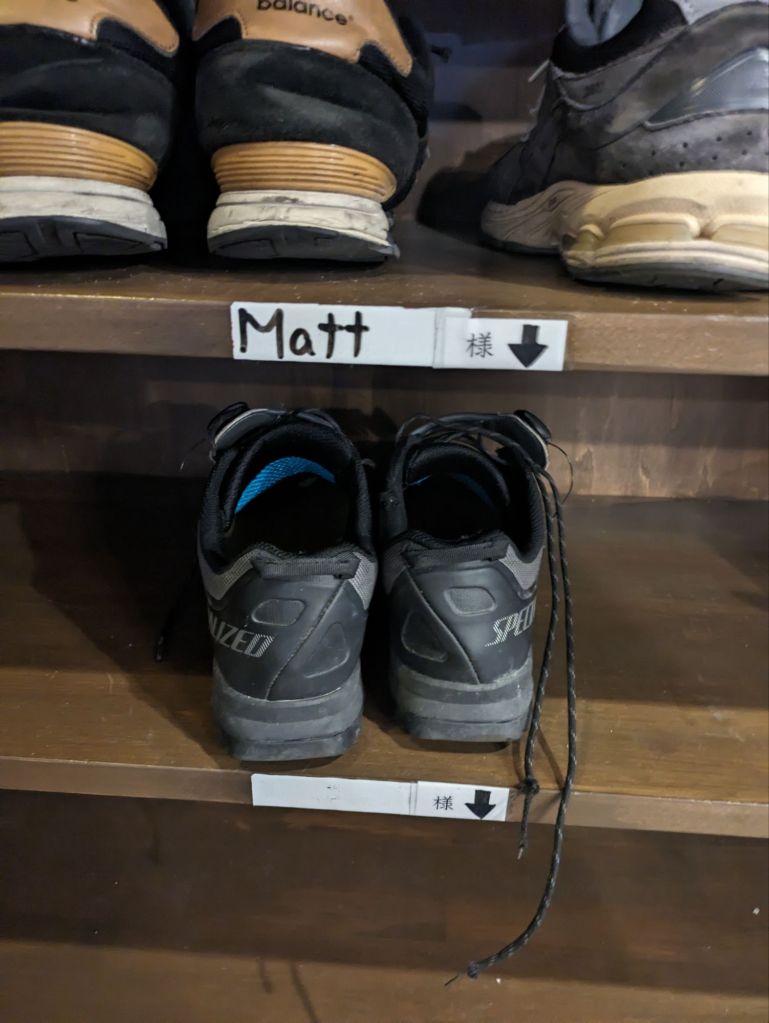
The people where I’m staying are so lovely they wrote my name above where they want me to leave my shoes, and on the door to my room.
“You’re staying in the room called Kiri.”
“What’s Kiri?”
The woman put her hands parallel as if she was about to clap, then raised them above her head.
“It’s a tree. Tall and thin like you.”
I looked it up later. It’s an empress pine, so I assumed what she said was just flattery.
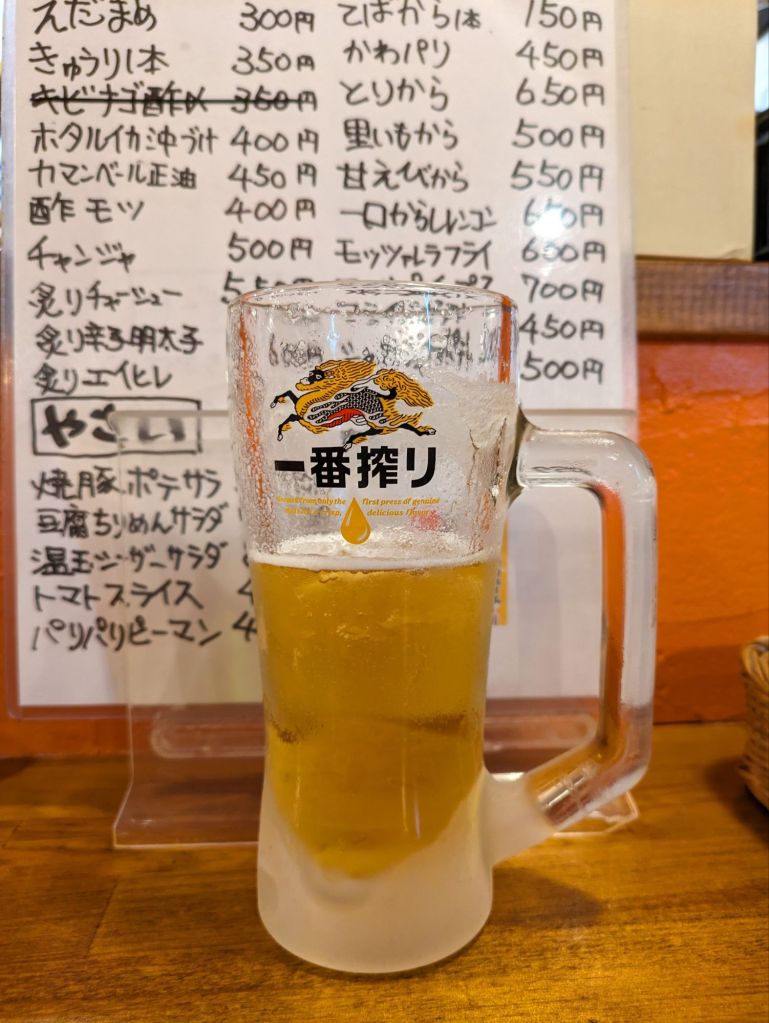
I did my washing, bathed, shaved and went back to the ramen shop I’d passed on the way in. The guy was a cyclist so we talked bikes, food, hip hop (of which I know nothing).
I asked him which ramen he recommended. He said, “We only do tonkotsu.”
“Kumamoto tonkotsu ramen is exactly what I wanted.”
When I turned the menu over later all the other ramens had been crossed out.
“Is it OK?” He asked, anxiously, as I choked over it.
“Delicious,” I said, truthfully. “I’m just eating it English style.”
As a cyclist he warned me not to take the 212 – the Alan Booth route – tomorrow as it’s narrow and choked with cars.
Which way should I go then?
He didn’t know. Fortunately, someone has sent me the .gpx of the cyclist route from Hitoyoshi. The safe one. I’ll miss the curly bridges, but Booth wouldn’t walk that way today either. You’d have to be a madman.
I’m cycling up a volcano tomorrow, if my Garmin can find it. Better get some sleep.



 The Himedomachi Cycling Club
Leave a reply to chrisinthailandc8eb48619e Cancel reply